- Choose a rain garden if you want to beautify your yard, support pollinators, and handle light to moderate runoff on mostly flat ground.
- Choose a French drain if you need to quickly move water away from foundations, driveways, or soggy spots—especially on slopes or heavy clay soil.
Bottom line: French drain solves flooding, rain garden solves drainage with style. For serious water issues, French drain wins. For eco-friendly landscaping, go rain garden.
When water starts collecting in a yard, it rarely stays a small problem for long. At first, it may look like a few harmless puddles after a storm.
Then the grass begins to thin out. Soil turns soggy. Water creeps toward the foundation. Mosquitoes appear. In some homes, the problem gets worse every season until the yard becomes difficult to use and expensive to maintain.
That is where two popular drainage solutions usually enter the conversation: the rain garden and the French drain.
This article breaks down the full comparison in a simple way. It covers how both systems work, where they perform best, what they cost, how they affect maintenance, and what homeowners often learn from experience after installation.
Why Drainage Problems Should Never Be Ignored
Poor drainage does more than create muddy patches. It can damage landscaping, weaken foundations, rot roots, stain walkways, and turn a healthy lawn into a constant repair project.
Water always follows gravity, so if a yard has low spots, compacted soil, or poor grading, runoff will settle in the wrong places.
Many homeowners first notice drainage issues after heavy rain. They may see standing water near a patio, along a driveway, around garden beds, or close to basement walls.
Some ignore it because the puddles disappear after a day or two. But recurring water movement often leaves behind silent damage. Soil shifts, mulch washes away, and plants begin to struggle.
That is why choosing the right drainage method matters. It is not only about getting rid of water. It is about controlling where water goes, how fast it moves, and what impact it has on the property over time.
What Is a Rain Garden?
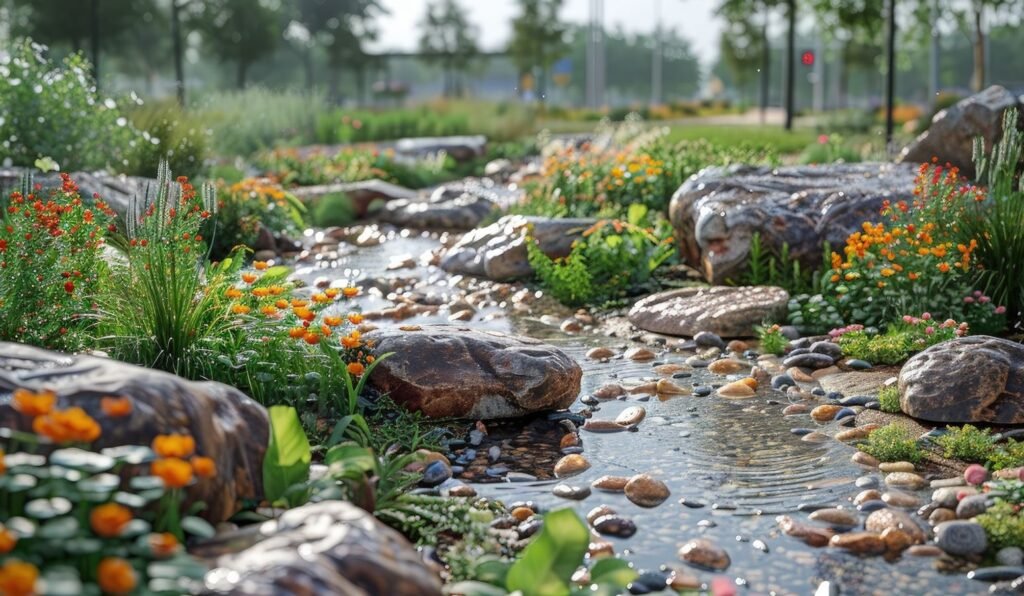
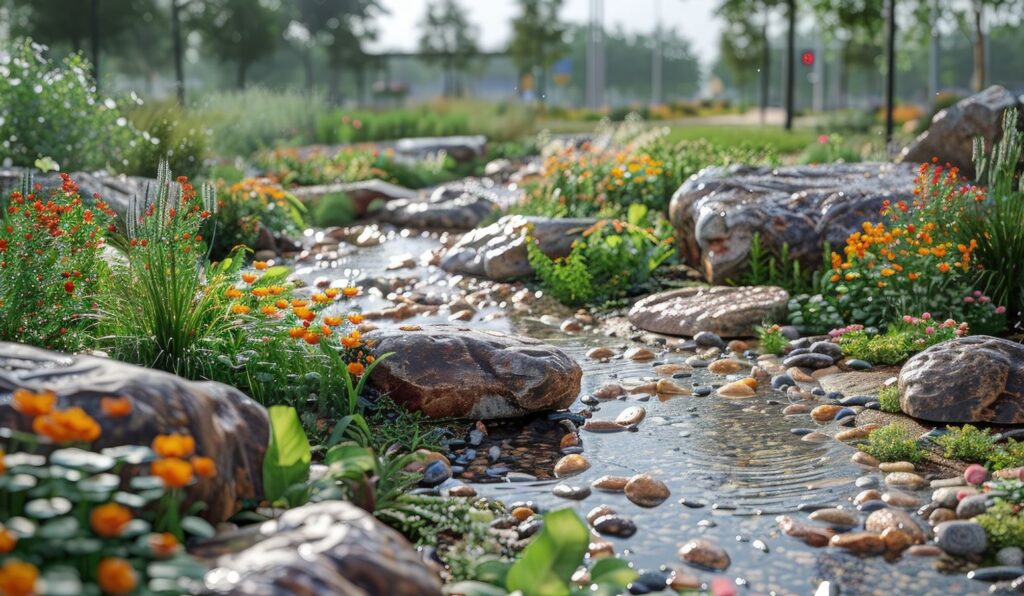
A rain garden is a shallow, planted area designed to collect and absorb stormwater runoff from places such as roofs, driveways, sidewalks, and lawns.
Instead of sending water straight into a storm drain or letting it flood a low spot, a rain garden holds water temporarily and allows it to soak into the soil naturally.
It usually includes layers of amended soil, mulch, and carefully selected plants that can tolerate both wet and dry conditions.
This balance is what makes a rain garden different from a regular flower bed. It is not just decorative. It is built to manage runoff in a controlled and useful way.
In real homeowner experience, a rain garden often becomes one of the most attractive parts of the yard. It can soften the look of a drainage area and turn a problem zone into a natural feature filled with texture, color, and seasonal interest. A homeowner who wants to plan dimensions carefully can use a Calculator Rain Garden before starting the layout.
A proper rain garden does not stay full of water all the time. It is meant to drain within a day or two after rainfall. If it stays soggy for too long, the design, soil mix, or placement may need correction.
What Is a French Drain?
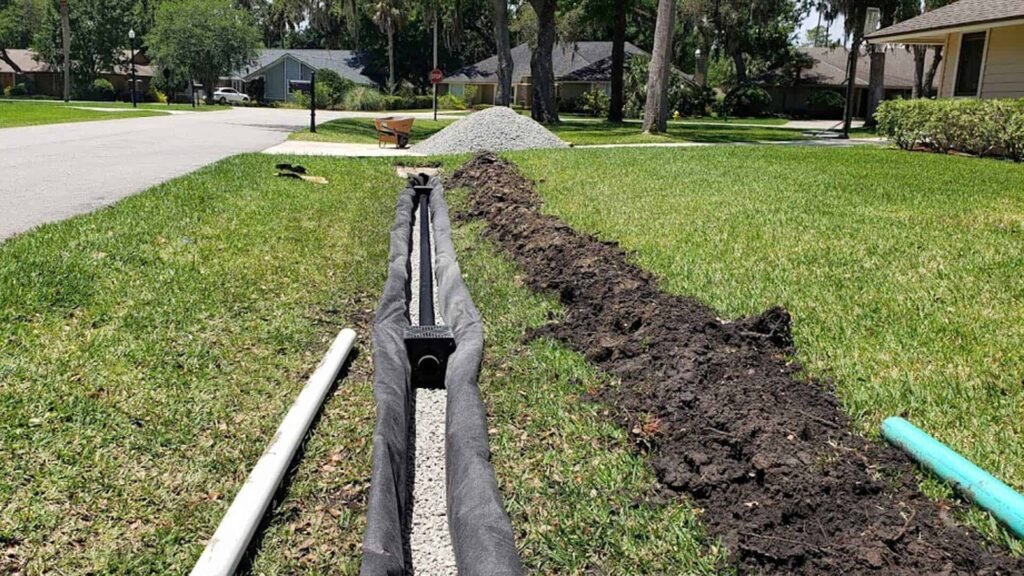
A French drain is an underground drainage system that redirects water away from a problem area. It usually consists of a gravel-filled trench containing a perforated pipe. Water enters the trench, flows into the pipe, and gets carried to a safer discharge point away from the house or wet zone.
Unlike a rain garden, a French drain is mostly hidden. After installation, the surface may be covered with gravel, grass, or decorative stone depending on the design. Its strength lies in water movement. It does not focus on beautifying runoff. It focuses on collecting and transporting water efficiently.
French drains are commonly used along foundations, retaining walls, basements, side yards, and any area where water needs to be moved away quickly.
Many contractors recommend them when water threatens structural areas or when the land does not allow water to soak in fast enough.
From experience, homeowners often appreciate French drains because they work quietly in the background. Once installed correctly, they can solve persistent drainage issues without changing the overall appearance of the landscape too much.
The Main Difference Between a Rain Garden and a French Drain
The simplest way to understand the difference is this:
- A rain garden absorbs water.
- A French drain moves water.
That difference shapes everything else.
A rain garden is part drainage solution and part landscape feature. It slows runoff, filters pollutants, supports plant life, and adds beauty. It works best where water can be captured and allowed to infiltrate into the ground.
A French drain is an engineered water pathway. It collects water and sends it elsewhere. It works best where water must be removed from a critical area, especially around buildings and hard surfaces.
This is why the better option depends on the actual problem. If the goal is to treat runoff in a natural way and improve the yard’s appearance, a rain garden may be the stronger choice. If the goal is to protect a structure from water pressure or constant pooling, a French drain may be the safer choice.
When a Rain Garden Is the Better Choice
A rain garden tends to be better when the property has enough space, the water source is mostly surface runoff, and the homeowner wants an eco-friendly solution that looks good.
It works especially well in yards where downspouts, driveway runoff, or lawn drainage create puddles in open areas away from the house. In those situations, the water can be directed into a planted basin where it slows down and soaks in gradually.
Homeowners often choose a rain garden because it offers benefits beyond drainage. It can support pollinators, reduce erosion, filter sediment, and make a plain yard feel more designed. It also helps reduce the amount of stormwater flowing into drains and local waterways.
A person building one for the first time usually learns that shape and depth matter more than expected. The basin must be deep enough to hold runoff but not so deep that it becomes unsafe or unattractive.
Many people look at the depth of the rain garden before finalizing the design because getting that part right affects how well the whole system performs.
A rain garden is often the better choice when:
- The drainage issue is not directly against the house
- The yard has room for a shallow basin
- The homeowner wants a natural landscape feature
- The soil can absorb water with some improvement
- Stormwater runoff comes from roofs, patios, or driveways
- The person wants environmental value along with drainage help
When a French Drain Is the Better Choice
A French drain is usually better when water must be removed from a specific problem area quickly and reliably. This is especially true near foundations, basement walls, crawl spaces, retaining walls, and narrow side yards where standing water can lead to serious damage.
If water keeps collecting near the house, beauty should not be the first priority. Protection should be. That is where the French drain has the advantage. It intercepts water before it builds pressure or seeps into places it should not go.
French drains are also strong options for heavy clay soil, slopes that send water toward structures, and properties where infiltration alone is not enough.
In many practical situations, homeowners who tried surface fixes first ended up choosing a French drain because the real issue was subsurface water or poor grading near the building.
A French drain is often the better choice when:
- Water pools close to the foundation
- The property has a basement or crawl space moisture problem
- The yard has limited space for landscaping features
- The soil drains poorly
- Water needs to be redirected to a discharge area
- The drainage problem is urgent and structural
Cost Comparison: Which One Is More Affordable?
Cost depends on yard size, labor rates, soil condition, materials, and whether the work is done professionally or as a DIY project. Still, there are some general patterns.
A rain garden can be affordable if the site is simple and the homeowner does part of the planting and soil preparation.
However, costs can rise if excavation is large, soil must be amended heavily, and high-quality native plants are used.
The visual side of the project can increase the budget because people often add edging, mulch, decorative stone, and a wider range of plants than originally planned.
A French drain may cost more upfront if trenching is long, access is difficult, or the system must route water far away.
Professional installation is common because slope, pipe placement, and discharge location must be correct. A poorly installed French drain can fail even if good materials are used.
From real homeowner experience, the cheaper option is not always the better value. A low-cost rain garden that is too small for the runoff volume may overflow and disappoint. A badly sloped French drain may clog or hold water instead of moving it.
That is why the yard should be measured carefully before deciding. The Size of the Rain Garden matters because an undersized basin will not manage runoff properly, no matter how attractive it looks.
Maintenance: Which One Is Easier to Live With?
Maintenance is another major point in this comparison.
A rain garden needs plant care, at least in the beginning. It may require weeding, mulching, trimming, replanting, and checking that water drains within the expected time.
Once established, maintenance often becomes lighter, especially if the right native or adaptive plants are used. But it is still a living feature, so it will never be completely maintenance-free.
Homeowners who enjoy gardening usually see this as a benefit rather than a burden. They like watching the space mature and change with the seasons. Those who want zero plant care may feel differently.
A French drain usually asks for less visible maintenance, but that does not mean no maintenance. Leaves, roots, sediment, and debris can eventually affect performance.
The inlet and discharge points should be checked, and the system may need occasional flushing if problems appear. Since most of it is underground, issues are harder to spot until drainage slows down.
In daily life, the rain garden demands more seasonal attention, while the French drain demands less frequent but more technical attention.
Appearance and Landscape Value
This is where the rain garden usually wins.
A well-designed rain garden can become a visual highlight. It adds color, softness, and movement to the yard while serving a practical purpose.
It can blend into a natural landscape, support birds and pollinators, and make drainage feel intentional instead of hidden.
The choice of vegetation plays a huge role here. Many homeowners spend time choosing Best Plants for Rain Garden options that match local weather, soil, and sun exposure.
A French drain, by contrast, is designed to disappear. That can be a benefit when the homeowner does not want to change the look of the yard.
But it does not usually add character or curb appeal on its own unless it is paired with decorative gravel or other landscape improvements.
So if visual impact matters, the rain garden has a clear edge.
Environmental Impact
A rain garden is often the more environmentally friendly option because it captures runoff, filters pollutants, reduces erosion, and supports biodiversity.
It helps water soak into the ground rather than rushing into storm systems. That means less pressure on local drainage infrastructure and cleaner water moving into nearby creeks and streams.
French drains are practical and effective, but they do not offer the same ecological benefits. Their job is to move water away, not to clean it or create habitat. They solve drainage problems well, but mostly from an engineering standpoint.
For homeowners who care about sustainability, the rain garden often feels like the more rewarding choice because it turns problem water into part of a larger landscape solution.
Soil and Site Conditions Matter More Than Preference
One of the biggest mistakes homeowners make is choosing based only on appearance or price. Site conditions matter more.
If soil drains too slowly, a rain garden may fail unless the area is amended properly and if the property slopes toward the house, a rain garden placed too close could make things worse.
If water pressure builds behind a retaining wall, a French drain may be essential and if runoff spreads across an open lawn, a rain garden may be ideal.
This is why experienced installers and landscape professionals always start by studying the source of the water, the slope of the yard, and the soil infiltration rate. What looks like one drainage problem may actually have several causes.
A homeowner may prefer the beauty of a rain garden, but if the real danger is hydrostatic pressure near the basement, a French drain is the better answer.
On the other hand, a person may assume they need an underground system when a properly placed rain garden could solve the issue more naturally and at a lower long-term environmental cost.
Can a Rain Garden and French Drain Work Together?
Yes, and in many properties, they should.
This is often the smartest solution for yards with mixed drainage issues. A French drain can protect the foundation and move water away from the house, while a rain garden can receive runoff in a lower landscape area and absorb it naturally.
That combination gives the property both protection and beauty. It also spreads the drainage work across two systems instead of expecting one method to solve every issue.
Homeowners with larger lots or more serious runoff patterns often get the best results this way. The French drain handles the urgent water movement. The rain garden handles the surface runoff and improves the look of the yard.
Common Mistakes Homeowners Make
Many drainage problems continue because the first solution was installed without understanding the actual cause.
One common mistake is building a rain garden too close to the house. That can send water toward the foundation instead of away from it.
Another mistake is making the basin too deep or too small, which either creates standing water or allows overflow.
With French drains, a common mistake is poor slope. If water cannot move properly through the pipe, the system will not work as intended. Wrong fabric, cheap gravel, crushed pipe sections, or blocked discharge points can also reduce performance.
Another major mistake is thinking that either system can fix bad grading on its own. If the entire yard directs water toward the house, both systems may struggle unless the grading issue is also addressed.
Final Verdict: Which Is Better?
The better option depends on what the yard truly needs. A rain garden is better for homeowners who want a natural, attractive, and environmentally friendly way to manage runoff in open areas. It works best when water can be absorbed safely into the soil and when beauty matters as much as function.
A French drain is better for homeowners who need to protect foundations, basements, retaining walls, or other critical structures from water buildup. It works best when water must be intercepted and redirected quickly.
If the question is about appearance, habitat value, and eco-friendly landscaping, the rain garden usually wins. If the question is about structural protection and reliable water removal, the French drain usually wins.
And if the property has both surface runoff and foundation risk, the best answer may not be one or the other. It may be both. In real homeowner experience, the most successful drainage projects begin when the problem is diagnosed honestly.
Water does not care about trends or design preferences. It follows the land. Once that behavior is understood, the right solution becomes much easier to choose.
A yard that stays dry, healthy, and usable through every season is not just more beautiful. It is more valuable, less stressful, and far easier to maintain over time.
That is why this decision matters. The better system is the one that fits the land, solves the real problem, and keeps working long after the first rain.
FAQs
What is the main difference between a rain garden and a French drain?
A rain garden is a planted shallow basin that collects and absorbs rainwater into the soil. A French drain is an underground pipe system that collects water and moves it away from a wet area. The main difference is that a rain garden absorbs water, while a French drain redirects it.
Is a rain garden better than a French drain for yard drainage?
A rain garden is better for managing surface runoff in open yard spaces and improving landscape beauty. A French drain is better for serious drainage problems near foundations, basements, or retaining walls. The better option depends on where the water collects and how fast it needs to be removed.
Can a rain garden and a French drain be used together?
Yes, a rain garden and a French drain can work together very well. A French drain can move water away from the house, while a rain garden can collect and absorb runoff in another part of the yard. This combination often gives the best long-term drainage results.
Do rain gardens require more maintenance than French drains?
Rain gardens usually need more regular maintenance because they include plants, mulch, and seasonal care. French drains need less frequent attention, but they still need inspection to prevent clogs or poor water flow. Each system needs maintenance in a different way.
Which is more affordable: a rain garden or a French drain?
A rain garden can be more affordable if the area is simple and the homeowner handles some of the work. A French drain may cost more because it usually involves trenching, gravel, pipe installation, and careful slope planning. The final cost depends on the size of the problem and the condition of the yard.