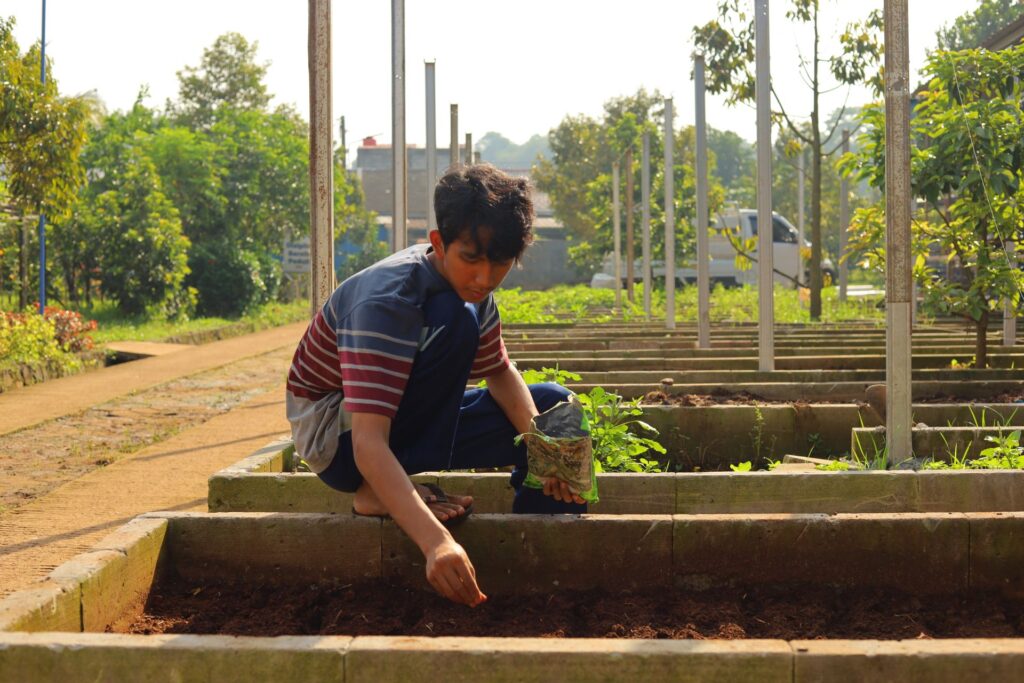
- Observe all day — check your spot every hour from sunrise to sunset and count direct sunlight hours
- Know your sun category — full sun (6+ hrs), partial sun (3–6 hrs), shade (under 3 hrs)
- Face south — south-facing spots get the most consistent light year-round
- Avoid tree roots and shadows — stay at least 10–15 feet from large trees
- Match plants to light — tomatoes and peppers need full sun; lettuce and spinach prefer partial shade
- Watch seasonal shifts — a sunny summer spot may be shadier in spring or fall
- Use a sun calculator — tracks accurate sunlight hours without guessing
Bottom line: Find where the sun hits longest, put your hungriest plants there, and work outward from that point.
If you have ever planted a tomato in the wrong spot and watched it struggle all summer, you already know how much sun exposure matters. Many gardeners — beginners and experienced ones alike — make the mistake of choosing a garden location based on convenience rather than light. They pick the patch closest to the back door or the area that looks the most open, only to discover months later that their plants are barely surviving.
This guide breaks down everything a gardener needs to know about sun exposure, how to read it, measure it, and use it to place plants in the right spots. It is written in a friendly, practical tone, drawing from real gardening experience so that anyone — from a first-year container grower to a seasoned backyard farmer — can find something useful here.
Why Sun Exposure Is the Foundation of a Healthy Garden
Think of sunlight as a plant’s food factory. Through photosynthesis, plants convert sunlight into the energy they need to grow, flower, and produce fruit. Without enough light, that factory slows down or shuts down completely.
Different plants need different amounts of sunlight. Some thrive with just a few hours of gentle morning light. Others demand six, eight, or even ten hours of direct sun every single day. When a plant does not get the light it needs, it does not just grow slowly — it becomes weak, attracts pests, and produces far less than it should.
Beyond plant health, sun exposure also affects soil temperature, moisture levels, and even pest activity. A spot that gets too much intense afternoon sun can dry out quickly, stress plants, and make watering feel like a full-time job. A spot that stays too shady stays too moist, which invites fungal problems and root rot.
This is why experienced gardeners spend real time studying their land before planting anything. It is not overthinking. It is smart planning.
Understanding the Different Sun Categories

Before choosing a garden spot, it helps to understand the standard sun categories that appear on seed packets and plant tags. These labels are not random — they are based on decades of horticultural research.
Full Sun
Full sun means a location receives at least 6 hours of direct sunlight per day. Most vegetables — especially warm-season crops like tomatoes, peppers, cucumbers, squash, and corn — fall into this category. Herbs like basil, rosemary, and thyme also love full sun.
If the goal is growing food, a full sun location is almost always the best choice. The more sun vegetables get (up to a reasonable point), the more they produce.
Partial Sun / Partial Shade
This category means roughly 3 to 6 hours of direct sunlight per day. Plants labeled as partial sun tend to need the upper end of that range — closer to 5 or 6 hours. Plants labeled as partial shade do better with the lower end — closer to 3 or 4 hours.
Many leafy greens — like lettuce, spinach, arugula, and kale — actually prefer partial shade, especially in hot climates. Too much intense sun makes them bolt (go to seed quickly) and turns their leaves bitter. Some flowering plants like impatiens and hostas also belong here.
Full Shade
Full shade means less than 3 hours of direct sunlight. Very few food crops thrive here, though some ferns, mosses, and shade-loving ornamentals can do well. For vegetable gardening purposes, full shade locations are generally not suitable.
Understanding these categories makes it much easier to match the right plant to the right place.
How the Sun Moves — and Why It Matters for Your Garden
The sun does not stay in one place. It rises in the east, moves across the sky, and sets in the west — but the angle and path it takes change with the seasons. In summer, the sun rides higher in the sky and spends more time above the horizon. In winter, it rides lower and the days are shorter.
This seasonal shift means a spot that gets full sun in July might get only partial sun in April or October. A garden planned for spring planting needs to account for spring sun patterns, not summer ones.
A few practical things to observe:
- South-facing spots (in the Northern Hemisphere) receive the most consistent sunlight throughout the day and year. These are almost always the best locations for vegetable gardens.
- North-facing spots receive the least light and stay cooler. They work best for shade-loving plants.
- East-facing spots get gentle morning sun and afternoon shade — great for plants that need light but not intense afternoon heat.
- West-facing spots get hot afternoon sun. Some plants love this; others find it too harsh.
Tall structures like houses, fences, and trees create shade patterns that shift throughout the day and year. A fence that barely shades the garden in summer might block significant light in early spring when the sun angle is lower.
How to Measure Sun Exposure in Your Garden
Many gardeners guess when it comes to sun exposure. They walk outside at noon, see their yard looks bright, and assume it gets full sun. This is one of the most common mistakes in garden planning.
The only reliable way to measure sun exposure is to track how many hours of direct sunlight actually reach a spot throughout the entire day — not just at noon. Here is how to do it properly.
The Manual Observation Method
Go outside every hour from sunrise to sunset and note whether the potential garden spot is in direct sunlight or shade. Write it down. At the end of the day, count the hours of direct sun. This method is simple, free, and surprisingly accurate.
The downside? It requires being home all day and paying attention consistently. Most people find it hard to stick with, especially during a busy week.
Using a Sun Calculator
A smarter and more convenient approach is to use a digital tool that does the heavy lifting. A Garden Sun Calculator uses your location and the time of year to calculate how many hours of sunlight your specific garden coordinates receive. It factors in latitude, seasonal sun angles, and can even help you compare different spots on your property.
Tools like this are particularly useful for gardeners who are planning a new bed or redesigning their layout. Instead of spending an entire day watching shadows, they can get accurate data quickly and use it to make smarter planting decisions.
Paying Attention to Shadow Patterns
Even without a calculator, anyone can start learning their yard’s light patterns by simply noticing shadows. Check the garden area in the morning, at midday, and in the late afternoon. Notice where the shadows fall and where they come from — a tall oak tree, a neighbor’s house, or a wooden fence can all create significant shade zones that are easy to miss.
Taking photos at different times of day is a great habit. Over a week, those photos reveal patterns that the eye alone can miss.
Common Mistakes Gardeners Make When Choosing a Spot
Even experienced gardeners make errors when selecting a garden location. Knowing the most common ones helps avoid repeating them.
Planting Too Close to Trees
Trees are beautiful, but they are also sun blockers. A tree that looks small in spring can cast significant shade by midsummer when its canopy is full. Trees also compete with garden plants for water and nutrients through their extensive root systems.
A general rule of thumb: keep vegetable gardens at least 10 to 15 feet away from large trees. More is better.
Ignoring Seasonal Changes
A spot that looks perfect in late spring might be heavily shaded by late summer when neighboring plants and trees are in full growth. Always think ahead and consider how the garden’s environment changes from month to month.
Overlooking Reflected Light
Some spots appear to be in shade but actually receive significant reflected light from a white wall, a light-colored fence, or a paved surface. Reflected light is not as powerful as direct sun, but it can make a marginal location workable for certain crops.
Assuming Indoor Light Is Equivalent
Gardeners who grow plants indoors before transplanting sometimes misjudge how different outdoor light is. Even a bright window provides far less light than an hour of outdoor sun. Plants grown indoors need a gradual hardening-off period before they go outside, and they will often behave very differently once they experience real sun exposure.
Matching Plants to Your Garden’s Sun Exposure
Once the sun exposure of a garden spot is understood, the next step is choosing plants that match those conditions. This is where garden planning becomes genuinely enjoyable.
For Full Sun Spots (6+ Hours)
- Tomatoes — need full sun to develop flavor and ripen properly
- Peppers — love heat and direct light
- Cucumbers — fast growers that thrive in full sun
- Squash and zucchini — big leaves, big sun appetite
- Beans — both bush and pole varieties do best in full sun
- Herbs — basil, oregano, thyme, rosemary, and sage all prefer full sun
For Partial Sun Spots (3–6 Hours)
- Lettuce — actually prefers some afternoon shade in warm climates
- Spinach — bolts quickly in too much heat; partial shade extends the season
- Kale and Swiss chard — tolerant of some shade
- Peas — cool-season crops that appreciate shade from afternoon heat
- Beets and radishes — root vegetables that manage well in partial sun
For Shady Spots (Under 3 Hours)
- Mint — spreads aggressively and handles shade well
- Parsley — one of the few herbs that tolerates low light
- Ornamental plants — hostas, ferns, astilbes, and impatiens thrive in shade
Understanding these matchups turns a challenging yard — one with lots of shade or awkward sun patterns — into a productive space. Instead of fighting the conditions, a good gardener works with them.
Using Garden Planning Tools to Make Smarter Decisions
Modern gardening does not have to rely entirely on trial and error. There are excellent digital tools available that help gardeners analyze their space, plan their layout, and make confident decisions before a single seed goes in the ground.
One practical approach is using garden planning tips with a sun calculator to map out which zones of a yard or plot receive what level of sunlight at different times of year. This kind of data-driven planning saves time, money, and the disappointment of watching a carefully planted bed underperform because the sun exposure was wrong.
These tools work especially well for gardeners who are working with a new property, redesigning an existing garden, or trying to figure out why plants in one part of the yard consistently do better than plants in another part.
The Role of Microclimates in Garden Planning
Every yard has microclimates — small zones where the temperature, humidity, or light differs from the surrounding area. A south-facing brick wall can create a warm microclimate that extends the growing season. A low-lying area might collect cold air on chilly nights, making frost hit earlier than expected.
Sun exposure is a big part of what creates microclimates. Spots that get extra sun hours naturally become warmer. Shaded corners stay cooler and moister. Understanding these microclimates gives a gardener a real advantage.
For example, a gardener who notices a particularly warm, sunny corner near a stone wall might use that spot for heat-loving peppers or eggplant — crops that sometimes struggle in cooler climates. Meanwhile, a cool, partially shaded area near a water feature might become the perfect home for lettuce that would otherwise bolt in summer heat.
Paying attention to microclimates is one of those things that separates gardeners who get good results from those who consistently struggle.
How to Improve a Less-Than-Ideal Sun Situation
Not every yard comes with the perfect south-facing, obstacle-free garden plot. But there are real ways to improve a challenging sun situation.
Trimming and Pruning
Overgrown shrubs, trees with low-hanging branches, and dense hedges can all reduce sunlight unnecessarily. Regular pruning opens up the canopy and lets more light reach the garden below. Before removing a tree entirely, consider whether selective pruning could solve the problem.
Raised Beds and Containers
When the ground-level sun situation is poor, going vertical or mobile helps. Raised beds can be positioned in the sunniest parts of a yard, even if that means placing them away from the traditional garden area. Container gardens offer even more flexibility — they can be moved as the seasons change to follow the sun.
Reflective Surfaces
Painting a nearby fence white or installing a light-colored wall can bounce additional light onto a shady garden bed. This will not turn a full shade spot into full sun, but it can push a partial shade location into a more usable range for a wider variety of plants.
Choosing the Right Season
In many climates, spring and fall offer different sun dynamics than summer. A spot that is too shady for tomatoes in summer might receive enough light for cool-season crops like spinach, kale, or peas in spring or fall when the sun angle is different and neighboring trees have not fully leafed out.
Measuring Sunlight: A Practical Step-by-Step Approach
For anyone ready to get serious about understanding their garden’s sun patterns, here is a simple process to follow.
Step 1: Choose the area being evaluated and mark it clearly.
Step 2: Starting at sunrise, check the spot every 60 minutes and record whether it is in direct sunlight or shade.
Step 3: Continue until sunset. Count the total hours of direct sunlight.
Step 4: Repeat the process on a clear day a few weeks later to compare — sun patterns shift as the season progresses.
Step 5: Use a reliable tool to measure sunlight in the garden digitally to cross-reference manual observations and get more precise data for planning purposes.
Step 6: Map out the different sun zones in the garden — full sun, partial sun, and shade — and use that map to assign plants to the right spots.
This process does not have to be complicated. Even spending one clear day observing the garden provides more useful information than months of guessing.
Real Experience: What Happens When You Get It Right
A gardener who spends time understanding their land before planting almost always gets better results. They stop fighting their garden and start working with it. Their tomatoes produce more fruit. Their lettuce does not bolt in May. Their herbs stay healthy all season long.
Sun exposure is not the only factor in a garden’s success — soil quality, watering, and pest management all matter too. But sun is the foundation. Get it wrong, and everything else becomes harder. Get it right, and even average soil and inconsistent watering can still produce a decent harvest.
The gardeners who understand their light are the ones who come to the end of summer with full baskets and plans to do it again next year.
Quick Summary
Sun exposure is the #1 factor in picking the right garden spot.
- Full sun (6+ hrs) → tomatoes, peppers, herbs
- Partial sun (3–6 hrs) → lettuce, kale, peas
- Full shade (under 3 hrs) → mint, ferns, ornamentals
Track shadows all day, face south, stay away from trees, and match plants to their light needs. Use a sun calculator for accuracy. Get the light right and everything else in the garden becomes easier.
Final Thoughts
Choosing the right garden spot based on sun exposure is not a complicated science, but it does require attention, observation, and a willingness to learn from the land. The sun categories — full sun, partial sun, and full shade — give a clear starting framework.
Observing shadow patterns, using smart digital tools, understanding microclimates, and matching plants to their light needs round out the picture.
Whether working with a large backyard, a small urban plot, or a collection of containers on a balcony, the principles stay the same. Find where the sun is. Understand how long it stays. Put the right plants there.
That single habit — placing plants in the right light — is one of the most powerful things any gardener can do. Start there, and everything else in the garden gets easier.
FAQs
How many hours of sun does a vegetable garden need?
Most vegetables need at least 6 hours of direct sunlight daily. Fruiting crops like tomatoes, peppers, and cucumbers perform best with 8–10 hours. Leafy greens like lettuce and spinach can manage with 3–5 hours.
What direction should a garden face for maximum sun?
A south-facing garden receives the most consistent direct sunlight throughout the day and across all seasons in the Northern Hemisphere. This makes it the best direction for vegetable gardens.
How do I know if my garden gets enough sun?
Check your garden spot every hour from sunrise to sunset on a clear day and count the hours of direct light. Alternatively, use a Garden Sun Calculator for accurate, location-based sunlight data without spending the whole day watching shadows.
Can vegetables grow in partial shade?
Yes. Cool-season vegetables like lettuce, spinach, kale, peas, and beets grow well in 3–6 hours of sunlight. However, warm-season crops like tomatoes and peppers will underperform and produce very little fruit in partial shade.
What happens if a garden gets too much sun?
Too much intense sun — especially harsh afternoon sun — dries out soil quickly, stresses plants, and can cause leaf scorch. Adding mulch, choosing heat-tolerant varieties, and providing afternoon shade can protect plants in overly sunny spots.