Measuring garden sunlight comes down to a few simple methods:
- Hourly check method — Go outside every hour on a sunny day and note if each bed is in sun or shade. Count the total hours at the end.
- Sunlight meter — A cheap $15–$60 device gives instant, accurate readings.
- Phone apps — Apps like Sun Seeker or Sun Surveyor show the sun’s path in real time.
Key rule: Full sun = 6+ hours, partial = 3–6 hours, shade = under 3 hours.
Measure in mid-summer on a clear day for the most accurate results.
Growing a thriving garden starts long before anyone puts a seed in the ground. It starts with understanding one of the most important resources a plant ever gets — sunlight. Many gardeners jump straight into buying plants and digging beds, only to watch their hard work struggle or fail because they never figured out how much sun their garden actually receives. Getting this right from the beginning changes everything.
This guide walks through exactly how to measure sunlight in a garden accurately, using both simple hands-on methods and modern tools. Whether someone is just starting out or trying to fix a garden that never quite performs the way it should, this information will help them make smarter planting decisions.
Why Measuring Sunlight Matters More Than Most Gardeners Realize
Plants are not flexible about light. A tomato plant that needs 8 hours of full sun will not compromise. A shade-loving fern placed in blazing afternoon light will burn and wither within days. The difference between a productive garden and a frustrating one often comes down to whether the gardener truly understood the light conditions before planting.
Experienced gardeners know this lesson well. Many of them learned it the hard way — planting sun-loving vegetables in a spot that looked bright in the morning but turned shady by noon. The result was stunted growth, poor fruiting, and wasted money on plants that never had a real chance.
Measuring sunlight accurately removes all that guesswork. It tells a gardener exactly what they are working with so they can match the right plants to the right spots.
Understanding the Basic Categories of Garden Sunlight
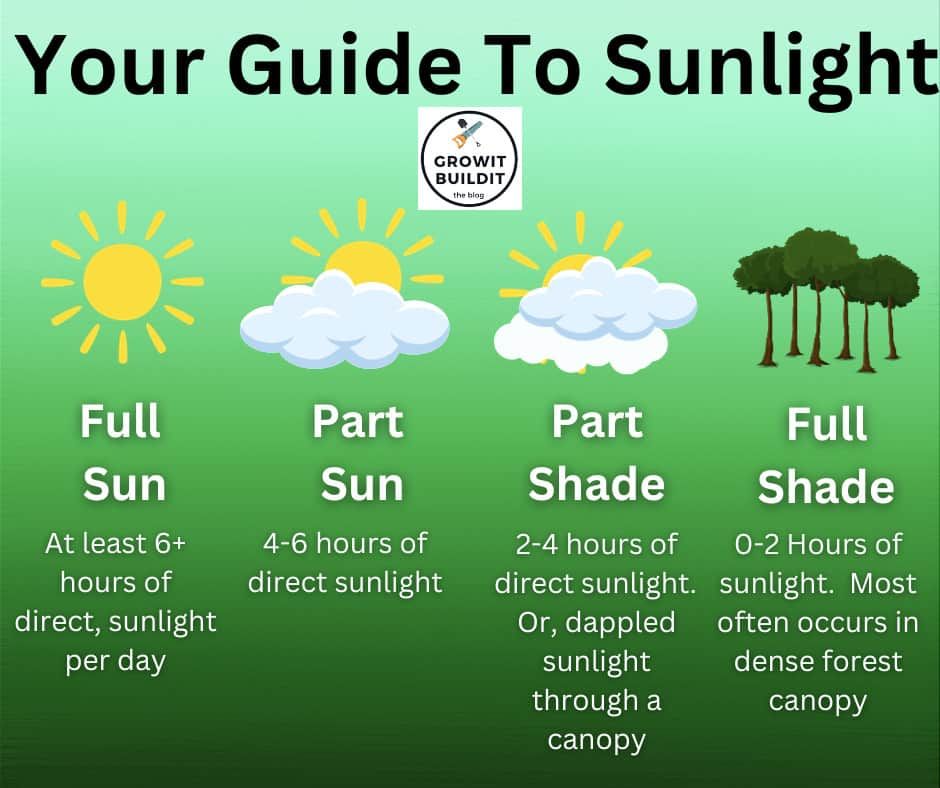
Before measuring anything, it helps to understand what the measurements actually mean. Horticulturalists and plant nurseries use a standard set of terms to describe light levels.
- Full Sun — A spot that receives 6 or more hours of direct sunlight per day. Most vegetables, many flowering plants, and fruit-bearing plants prefer this.
- Partial Sun / Partial Shade — A spot that receives 3 to 6 hours of direct sunlight per day. Many herbs, some perennials, and leafy greens do well here.
- Full Shade — A spot that receives fewer than 3 hours of direct sunlight per day. Ferns, hostas, and certain ground covers thrive in these conditions.
Understanding these categories helps a gardener interpret their measurements correctly and make the right plant choices afterward.
The Simple Paper-and-Pencil Method (The Classic Approach)
The most straightforward way to measure garden sunlight requires nothing more than a notebook, a pen, and a committed day of observation. It is low-tech, reliable, and has been used by experienced gardeners for generations.
Here is how it works:
On a clear, sunny day, a gardener goes outside every hour from sunrise to sunset and checks each garden bed or planting area. They note whether that spot is in full sun, partial shade, or full shade at that exact moment. At the end of the day, they count the number of hours each area received direct sunlight.
It sounds simple because it is. But the results are genuinely accurate. This method accounts for the real movement of the sun across the sky, shadows cast by trees and buildings, and the natural filtering effect of overhead foliage.
Tips for making this method work well:
- Do this on a clear day with no cloud cover, since clouds give a false impression of shade.
- Take notes every 60 minutes — not every two hours. One missed check can throw off the count.
- Measure in the middle of the growing season — typically June or July in the Northern Hemisphere — when the sun is at its highest point and shadows are shortest.
- Check early spring and late fall separately if planting for those seasons, since the sun sits lower and shadows behave differently.
Many experienced gardeners set a timer on their phone and do this exercise across an entire Saturday. By the time evening comes, they have a clear picture of which parts of their garden are the sunniest and which are shadier than they thought.
Using a Sunlight Meter or Light Sensor
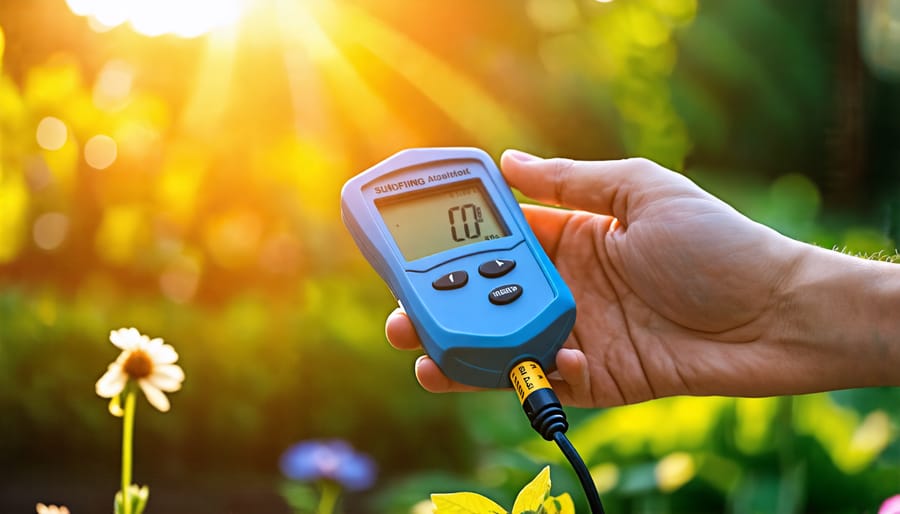
For those who want more precision or simply cannot be outside every hour throughout the day, a sunlight meter (also called a light meter or PAR meter) is a worthwhile investment.
These handheld devices measure light intensity in units like foot-candles or lux, and some measure PAR (Photosynthetically Active Radiation), which is the specific part of light that plants use for photosynthesis. PAR meters are especially popular among serious vegetable growers and greenhouse operators.
How to use a sunlight meter effectively:
- Place the sensor at plant height, not at eye level. The light a plant receives at ground level is what matters, not what is happening several feet above it.
- Take readings at multiple times throughout the day — typically at 9 AM, 12 PM, and 3 PM at minimum — to capture the full range of sun exposure.
- Record each reading and look for patterns across the day.
More advanced data-logging light sensors can be placed in the garden and left for 24 to 48 hours, recording light levels automatically throughout the day and night. These give an incredibly detailed picture without requiring constant manual observation.
Good-quality light meters are available at garden centers and online. Prices range from around $15 for basic models to $300 or more for professional-grade PAR meters. For most home gardeners, a mid-range model in the $30 to $60 range works well.
Using a Compass and Sun Path Maps
Understanding the sun’s path through the sky helps a gardener predict sun exposure even before spending a full day observing. This approach is especially useful when planning a new garden in a space they have not yet worked with.
The compass method:
- South-facing areas (in the Northern Hemisphere) receive the most sun throughout the day.
- North-facing slopes and beds tend to receive the least.
- East-facing spots get gentle morning sun and afternoon shade.
- West-facing spots get afternoon sun, which is typically more intense and hotter.
A simple compass — even a phone compass — tells a gardener the orientation of each garden bed in seconds. Combined with knowledge of nearby obstacles like fences, walls, and trees, this gives a rough estimate of sun exposure.
Sun path charts take this further. These are diagrams that show the arc of the sun across the sky at different times of year for a specific location. Many gardening websites and apps offer interactive sun path tools. By entering a location, a gardener can see exactly where the sun rises and sets and how high it climbs at different seasons.
This method works best when combined with actual observation — use the compass and sun path as a starting framework, then verify with direct measurement.
How Shadows Change Through the Seasons
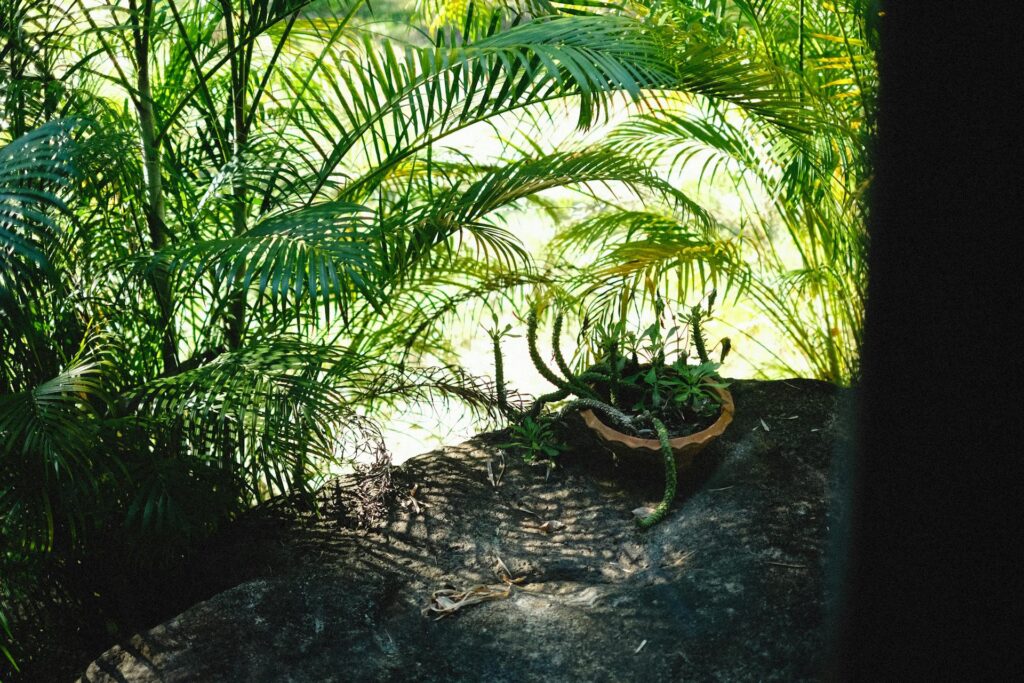
One mistake gardeners make is measuring sunlight only once and assuming it stays the same year-round. It does not. Shadows change dramatically with the seasons, and a spot that looks sunny in May may be deeply shaded in November.
This happens because the sun follows a different arc across the sky in summer versus winter. In summer, the sun climbs high — sometimes nearly overhead — casting short shadows. In winter, the sun stays low on the horizon, casting long shadows that can reach well into spaces that seemed open and bright months earlier.
Deciduous trees add another layer of complexity. A tree that is bare in March and April lets full sun stream through to the garden beds below. By June, that same tree is fully leafed out and may be blocking 30% to 50% of incoming light. Many gardeners plant spring bulbs beneath deciduous trees specifically because those bulbs get the full sun they need before the canopy fills in.
The practical advice here is to measure sunlight at least twice a year — once in late spring or early summer and once in early fall. This gives a more complete picture of the conditions a garden experiences across the growing season.
Using Technology: Apps and Online Tools
Technology has made it easier than ever to understand garden sunlight without spending hours outside with a notebook. Several smartphone apps and online tools now offer useful sunlight analysis.
Apps like Sun Seeker, Lumos, and Sun Surveyor use a phone’s GPS and compass to show the sun’s path across the sky in real time, often overlaid on the phone’s camera view. A gardener can point their phone at a garden bed and see exactly where the sun will be at any time of day or year.
For gardeners who want to go a step further and get a tailored understanding of how sunlight affects their specific growing plans, the Sun Calculator for Garden is a practical online tool that helps them evaluate sun exposure based on their planting goals. Tools like this are especially helpful when deciding which vegetables or flowers to plant in each bed.
These digital tools do not replace direct observation entirely, but they make excellent planning companions — particularly when scouting a new location or planning changes during winter when the garden is dormant.
Mapping the Garden’s Sun Zones
Once a gardener has gathered sunlight measurements, the next step is to map those findings onto the garden layout. This is called sun zone mapping, and it is one of the most valuable planning exercises a gardener can do.
How to create a sun map:
- Sketch a rough overhead view of the garden on paper or use a free garden planning tool.
- Mark each area with its average daily sun hours — for example, “8 hours,” “4 hours,” or “2 hours.”
- Color-code the map: use yellow for full sun areas, orange for partial sun, and blue or green for shade.
- Refer to this map when choosing where to plant each crop or flower.
A sun map does not need to be precise or artistic. Even a rough sketch helps a gardener visualize their space and make better planting decisions at a glance.
Many experienced gardeners update their sun maps each year as trees grow, new structures are built, or hedges fill out. A garden’s light conditions evolve over time, and the map should evolve with them.
Common Mistakes People Make When Measuring Garden Sun

Even well-intentioned gardeners sometimes make measurement errors that lead to poor planting decisions. Here are the most common mistakes to avoid.
Measuring on a cloudy day. Clouds reduce and scatter light dramatically. A measurement taken on an overcast day tells a gardener almost nothing about what that spot looks like in full sun. Always measure on a clear day.
Only measuring in one season. As covered earlier, sun patterns change with the seasons. A single measurement in early spring does not reflect what that spot looks like in the height of summer.
Ignoring nearby structures. A new fence, a garden shed, or even a neighbor’s tall hedge can transform a sunny spot into a shady one. Always account for vertical structures when assessing sunlight.
Measuring at the wrong height. Light at soil level can be very different from light at eye level, especially under trees or near tall plants. Always measure at the height where the plants will actually grow.
Forgetting reflected light. White walls, light-colored gravel, and reflective surfaces can bounce additional light into shady areas. Some plants actually benefit from this reflected light even when they are not in direct sun.
Soil, Water, and Sunlight: How They Work Together
Sunlight does not work in isolation. It interacts directly with soil moisture and temperature, and understanding these connections helps a gardener read their garden more completely.
High-sun areas tend to dry out faster because the sun warms the soil and increases evaporation. Sandy soils in full sun may need watering every day in summer, while the same soil in shade might go three to four days between waterings. Measuring sunlight accurately helps gardeners predict watering needs more precisely.
Soil temperature is another factor. Full sun warms soil faster in spring, which is one reason warm-season crops like tomatoes, peppers, and squash do so much better in sunny spots. Shaded beds stay cool longer, making them better for cool-season crops like lettuce, spinach, and radishes.
This interconnected view of the garden — where light, water, and soil all influence each other — is what separates experienced growers from beginners. Measuring sunlight is the starting point that unlocks a much deeper understanding of how a garden actually functions.
Planning the Garden Around Sunlight Data
Once a gardener knows the sun hours for each area of their garden, they can calculate sun for garden requirements and match each plant to its ideal location with confidence.
General planting guidelines based on sun hours:
- 8+ hours: Tomatoes, peppers, cucumbers, squash, corn, sunflowers, roses, lavender
- 6 to 8 hours: Beans, peas, basil, most herbs, echinacea, dahlias
- 4 to 6 hours: Lettuce, spinach, kale, cilantro, impatiens, begonias
- Under 4 hours: Hostas, ferns, astilbe, bleeding heart, wild ginger
Following these guidelines dramatically improves plant success rates. Gardeners who match plants to their actual sun conditions report healthier plants, higher yields, and far fewer disappointments.
Seasonal Planning With Sunlight in Mind
Smart gardeners do not just measure sun once and move on. They use sunlight data to plan across the entire growing calendar and they know which beds are warmest in spring and use those for early plantings and also they rotate crops based on which areas offer the best conditions for each plant family. They also plant shade lovers under trees and save the sunniest spots for the highest-value crops.
This kind of intentional planning is what separates a garden that produces reliably year after year from one that feels like a guessing game every spring.
Quick Summary
Measuring garden sunlight accurately helps match the right plants to the right spots.
3 main methods:
- Hourly observation — check every hour on a clear day, count total sun hours
- Light meter — affordable device ($15–$60) for precise readings
- Phone apps — Sun Seeker, Sun Surveyor show real-time sun paths
Sun categories:
- Full sun = 6+ hours
- Partial = 3–6 hours
- Shade = under 3 hours
Key tips:
- Always measure on a clear day
- Measure twice a year (summer + fall) since shadows shift with seasons
- Check at plant height, not eye level
- Map your findings to match plants to their ideal spots
Bottom line — know your sun, grow better plants.
The Bottom Line: Accurate Sunlight Measurement Is the Foundation of a Great Garden
Measuring sunlight in a garden accurately is not complicated, but it does require attention and a willingness to observe before planting. The methods available range from the simple hourly notebook check to digital apps and professional-grade light meters. Each one offers genuine value, and the best approach often combines a few of them together.
The gardeners who take the time to understand their sun conditions — who spend a day counting hours, sketching maps, and noting how shadows move — are the same gardeners whose plants thrive. They are not luckier than anyone else. They simply started with better information.
A garden built on accurate sunlight data is a garden set up to succeed from the very first seed. That is a foundation worth building carefully.
FAQs
How many hours of sunlight does a garden need?
Most vegetables need 6 to 8 hours of direct sunlight daily. Full sun plants need 6+ hours, partial shade plants need 3 to 6 hours, and shade-loving plants survive on fewer than 3 hours per day.
What is the best time of day to measure sunlight in a garden?
The best approach is to check every hour from sunrise to sunset on a clear day. Take key readings at 9 AM, 12 PM, and 3 PM to capture morning, peak, and afternoon sun levels accurately.
What tool is used to measure sunlight in a garden?
A sunlight meter or PAR meter is the most accurate tool. Basic models cost $15 to $60 and measure light intensity at plant level. Smartphone apps like Sun Seeker and Sun Surveyor also work well for quick estimates.
Does garden sunlight change with the seasons?
Yes. The sun sits higher in summer and lower in winter, creating longer shadows. A sunny spring bed can become 30 to 50% shadier by midsummer when trees fully leaf out. Measure sunlight at least twice a year for accuracy.
How do I know if my garden gets full sun or partial shade?
Observe your garden on a clear sunny day and count the total hours of direct sunlight each area receives. 6 or more hours means full sun. 3 to 6 hours is partial shade. Under 3 hours is full shade.