A good flow rate for a garden hose is generally 9 to 17 GPM for most home tasks. Use 4 to 8 GPM for gentle plant watering, and 12 to 18 GPM for filling pools or washing cars. A 3/4 inch hose gives the highest flow, but testing your own setup with a bucket or the Garden Hose Flow Rate Calculator gives the most accurate answer.
Anyone who has stood in the yard waiting for a bucket to fill, or watched a sprinkler barely sputter to life, has probably wondered if something is wrong with their hose. The truth is, most of the time, it comes down to one simple thing: flow rate.
Understanding this one number can save hours of frustration, lower water bills, and even help plants and lawns thrive better. This guide breaks everything down in plain, friendly language, based on real-world testing and everyday gardening experience, so anyone can figure out what works best for their setup.
Understanding Flow Rate in Simple Terms
Flow rate is basically how much water moves through a hose in a set amount of time. It is usually measured in gallons per minute (GPM), though some people also use liters per minute (LPM). Think of it like a highway: the wider the road and the fewer the traffic jams, the more cars can pass through every minute. A garden hose works the same way. Water pressure pushes the water in, and the hose’s diameter, length, and condition decide how much actually comes out the other end.
A lot of homeowners assume that water pressure alone determines how fast water comes out, but that is only half the story. Flow rate is the combination of pressure and the hose’s ability to let that pressure through without choking it. A hose can be connected to a powerful 60 PSI water supply, but if the hose itself is narrow or kinked, the flow rate at the nozzle will still be low.
What Counts as a “Good” Flow Rate?
For most residential gardening tasks, a flow rate between 9 and 17 GPM is considered good. This range covers everything from watering flower beds to filling a kiddie pool at a reasonable pace. Anything below 6 GPM tends to feel slow for daily chores, while flow rates above 17 GPM are usually more than needed unless someone is using a pressure washer attachment or filling a large pool quickly.
To put this into perspective, a standard kitchen faucet runs at roughly 2 GPM, so even a “slow” garden hose is often still faster than indoor taps. The difference becomes noticeable mainly when comparing hoses to each other, not when comparing a hose to household plumbing.
It is worth checking actual numbers rather than guessing, and this is where a simple online tool can help. The Garden Hose Flow Rate Calculator allows anyone to plug in their hose diameter, length, and water pressure to get an estimated GPM instantly. This is especially useful before buying a new hose, since it removes the guesswork.
How Hose Diameter Affects Flow Rate
Diameter is probably the single biggest factor in determining flow rate, and it is also the one most people overlook when shopping for a new hose. Garden hoses typically come in three common sizes: half inch (1/2″), five-eighths inch (5/8″), and three-quarter inch (3/4″).
Here is a rough breakdown based on average household water pressure of around 45 to 50 PSI:
- A 1/2 inch hose typically delivers around 9 to 10 GPM
- A 5/8 inch hose typically delivers around 12 to 13 GPM
- A 3/4 inch hose typically delivers around 17 to 18 GPM
These numbers might look small on paper, but the difference is huge in practice. Doubling the diameter of a hose can more than double the flow rate because water moves through a larger cross-sectional area. Anyone who has switched from a 1/2 inch to a 3/4 inch hose for filling a pool knows the difference is night and day, often cutting fill time nearly in half.
How Hose Length Affects Flow Rate
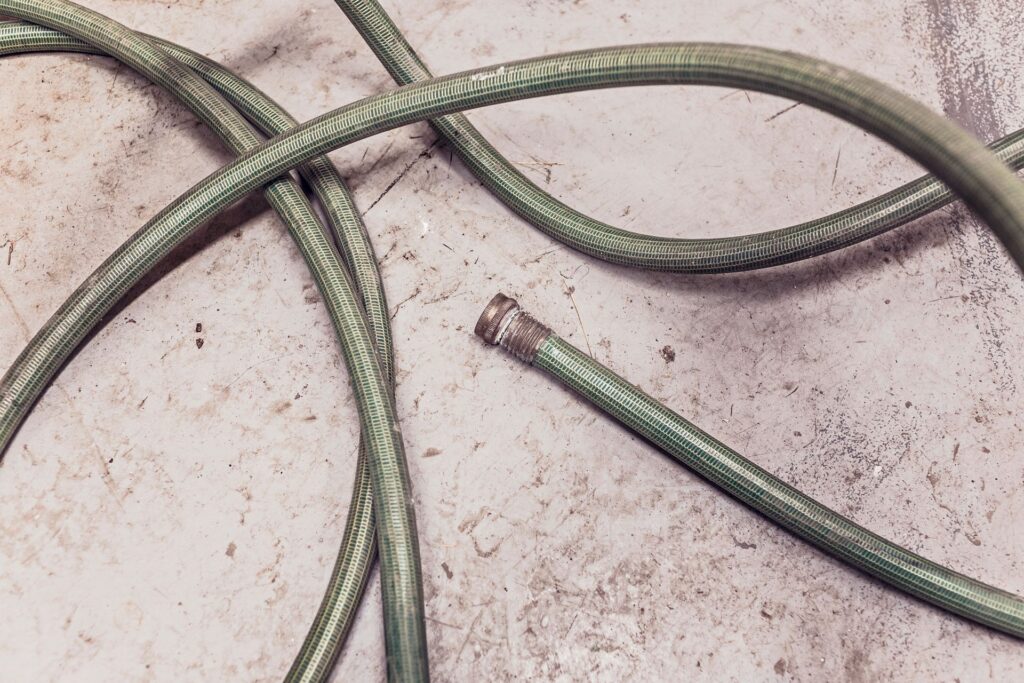
Longer hoses naturally reduce flow rate because water has to travel further and faces more resistance along the way, a concept often called friction loss. A 25 foot hose will almost always have a higher flow rate than a 100 foot hose of the same diameter and connected to the same water source.
For example, a 5/8 inch hose that delivers 13 GPM at 25 feet might only deliver around 10 to 11 GPM at 75 feet. This drop happens gradually, not all at once, so it is easy to miss unless flow rate is actually measured at different lengths.
For most backyard tasks, a length between 25 and 50 feet strikes a good balance between reach and flow. Anything beyond 100 feet usually requires either a wider diameter hose or a booster pump to maintain a useful flow rate at the far end.
Water Pressure and Its Role
Water pressure, measured in PSI (pounds per square inch), is the force pushing water through the hose. Most homes in the United States have water pressure somewhere between 40 and 60 PSI, though this can vary depending on the city, the time of day, and even the season.
Higher pressure generally means higher flow rate, but only up to a point. Once a hose reaches its maximum capacity for its diameter, extra pressure does not help much and can even cause the hose to bulge, leak, or burst at weak points like the connections. This is why flow rate and pressure should be thought of as a team rather than two separate numbers.
Anyone unsure about their home’s water pressure can test it with an inexpensive pressure gauge that screws directly onto an outdoor spigot. This takes less than a minute and gives a clear starting point before calculating expected flow rate.
Why Flow Rate Matters for Different Garden Tasks
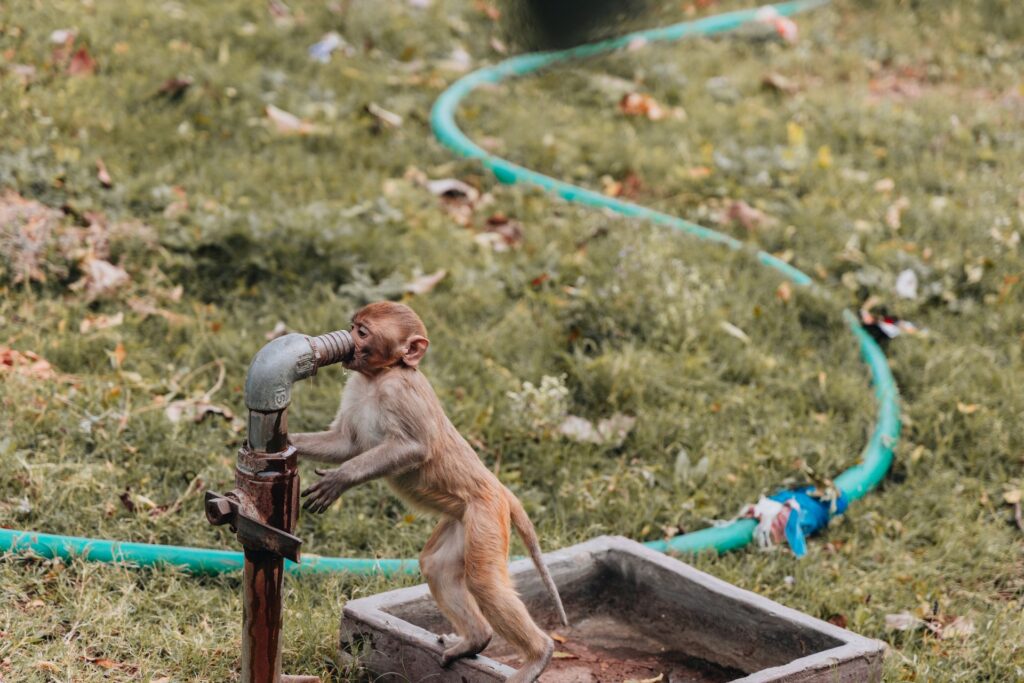
Not every task needs the same flow rate, and understanding this helps avoid both wasted water and frustratingly slow chores.
Watering Plants and Flower Beds
For gentle watering of flower beds, vegetable gardens, or potted plants, a lower flow rate is actually better. Around 4 to 8 GPM is usually ideal because it allows water to soak into the soil rather than running off the surface or disturbing the roots. Many gardeners actually prefer using a 1/2 inch hose with a spray nozzle for this exact reason, since the slower flow gives better control.
Filling Pools, Ponds, or Large Containers
For filling tasks, a higher flow rate saves a lot of time. A 3/4 inch hose delivering 17 to 18 GPM can fill a medium-sized kiddie pool in a fraction of the time compared to a thinner hose. For larger above-ground pools, even a high flow rate hose can take several hours, so this is one area where flow rate truly makes a visible difference.
Washing Cars, Driveways, or Outdoor Furniture
Washing tasks usually benefit from a flow rate in the 8 to 12 GPM range, paired with a nozzle that can switch between a gentle spray and a focused jet. Too much flow without pressure control can waste water and create a mess, while too little flow makes rinsing soap off slow and tedious.
Using Sprinklers and Irrigation Systems
Sprinklers and drip irrigation systems often have specific flow rate requirements listed by the manufacturer, usually somewhere between 6 and 12 GPM depending on the size and number of sprinkler heads. Using a hose with a flow rate below this range can cause sprinklers to underperform, with some heads barely popping up or rotating properly.
Common Reasons Flow Rate Drops Over Time
It is common for a hose that once had great flow rate to slow down over months or years of use. A few experience-based reasons explain why this happens:
Mineral buildup inside the hose, especially in areas with hard water, can gradually narrow the internal diameter. Over a few years, this buildup can reduce flow rate noticeably, sometimes by 10% to 20%.
Kinks and bends are another major culprit. Even a small kink near the spigot can choke flow significantly, sometimes cutting it by half or more. This is especially common with cheaper hoses that have thinner walls and less flexibility.
Worn-out washers at the connection points can cause leaks that reduce the pressure reaching the nozzle, which in turn lowers the effective flow rate even if the hose itself is in good condition.
Clogged nozzles are often overlooked. Dirt, debris, or mineral deposits can build up inside spray nozzles and significantly reduce output, even when the hose itself is delivering a normal flow rate.
How to Test Flow Rate at Home
Testing flow rate does not require any special tools, just a bucket, a stopwatch, and a few minutes of patience. Here is a simple step-by-step method that many gardeners use:
First, find a bucket with a known volume, such as a 5 gallon bucket, which are widely available at hardware stores. Next, turn the hose on to full pressure and start a timer the moment water begins filling the bucket. Stop the timer once the bucket is full, then divide 5 by the number of seconds it took, and multiply by 60 to get gallons per minute.
For example, if the bucket fills in 20 seconds, the math looks like this: 5 ÷ 20 = 0.25, then 0.25 × 60 = 15 GPM. This quick test gives a real-world number that accounts for the actual hose, connections, and water pressure being used, rather than relying on manufacturer estimates alone.
For those who prefer not to do manual math, the same Garden Hose Flow Rate Calculator mentioned earlier can also work backward, helping confirm whether a measured result lines up with expected ranges based on hose specifications.
Tips to Improve Flow Rate Without Buying a New Hose
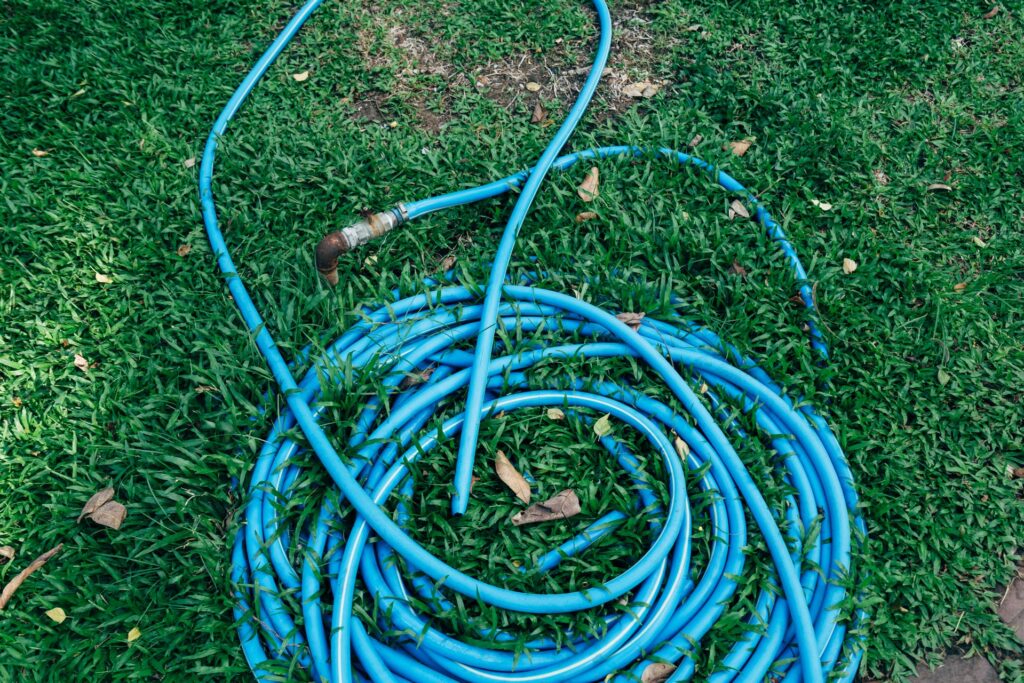
Before rushing out to buy a new hose, there are several practical fixes that often restore lost flow rate.
Straightening out kinks and storing the hose properly on a reel can prevent permanent bends from forming, which is one of the easiest ways to maintain consistent flow rate over time.
Cleaning or replacing the nozzle is another quick fix. Soaking a clogged nozzle in a mixture of water and white vinegar for about 30 minutes can dissolve mineral deposits and restore much of the original flow.
Checking and replacing washers at both ends of the hose, where it connects to the spigot and to the nozzle, can fix small leaks that are silently reducing pressure and flow.
Flushing the hose occasionally by running it at full blast without a nozzle attached for 10 to 15 seconds can help dislodge loose debris or sediment that has built up inside.
Choosing the Right Hose Based on Flow Rate Needs
When shopping for a new hose, it helps to think about the primary use case rather than just grabbing whatever is on sale. Someone who mostly waters potted plants on a balcony does not need the same hose as someone filling a large garden pond.
For general all-purpose use, a 5/8 inch hose at 50 feet offers a solid middle ground, balancing reach, flow rate, and ease of handling. For larger properties or tasks like filling pools, a 3/4 inch hose, even if slightly heavier and less flexible, will save significant time over the years.
Material also plays a small role. Rubber hoses tend to maintain their internal diameter better under pressure compared to some vinyl hoses, which can slightly expand or contract depending on temperature, subtly affecting flow rate in very hot or cold weather.
A Quick Reference Table for Flow Rate Expectations
To make things easier, here is a simplified reference based on 50 PSI water pressure and a 50 foot hose length, which is one of the most common setups in residential settings:
A 1/2 inch hose typically falls between 7 and 9 GPM. A 5/8 inch hose typically falls between 10 and 12 GPM. A 3/4 inch hose typically falls between 14 and 17 GPM.
These numbers can shift slightly based on the specific water pressure at any given home, which is why testing with a bucket or using a calculator gives more accurate, personalized results than relying on general averages alone.
Common Questions People Ask About Hose Flow Rate
Many readers wonder what a good GPM actually looks like in real life, and the answer usually falls between 9 and 17 GPM for most home gardening tasks. Lighter jobs, like watering flower beds, work best with 4 to 8 GPM, while filling pools or washing cars benefits from something closer to 12 to 18 GPM.
Another question that comes up often is how to actually increase flow rate without spending money on a brand new hose. The fix is usually simple: straighten out any kinks, replace worn washers, soak clogged nozzles in vinegar, or upgrade to a 3/4 inch hose, which naturally delivers more water than a 1/2 inch hose at the same pressure.
Hose length is also a common point of confusion. Longer hoses do reduce flow rate because of friction loss, so a 100 foot hose will always deliver less water than a 25 foot hose of the same diameter, even when both are connected to the exact same water source.
When it comes to choosing the best size, a 3/4 inch hose consistently offers the highest flow rate among standard options, typically delivering 14 to 18 GPM. By comparison, a 1/2 inch hose usually sits around 7 to 9 GPM, while a 5/8 inch hose falls somewhere in between at 10 to 13 GPM.
Finally, testing flow rate at home is easier than most people expect. All it takes is a 5 gallon bucket and a stopwatch. Time how long it takes to fill the bucket, divide 5 by that number of seconds, then multiply by 60 to get the GPM. This quick test gives a real, personalized number that reflects the actual hose, pressure, and setup being used.
Summary
- Flow rate is how much water moves through a hose per minute, measured in GPM (gallons per minute) or LPM (liters per minute).
- Flow rate depends on a combination of water pressure and the hose’s ability to let that pressure through without restriction.
- A good flow rate for most home gardening tasks falls between 9 and 17 GPM.
- Anything below 6 GPM feels slow for daily chores, while anything above 17 GPM is usually more than needed for typical use.
- For comparison, a standard kitchen faucet runs at around 2 GPM, so even a slower hose often outperforms indoor taps.
- The Garden Hose Flow Rate Calculator helps estimate GPM based on hose diameter, length, and pressure.
- Hose diameter is the biggest factor affecting flow rate:
- 1/2 inch hose: roughly 9 to 10 GPM
- 5/8 inch hose: roughly 12 to 13 GPM
- 3/4 inch hose: roughly 17 to 18 GPM
- Hose length reduces flow rate due to friction loss; longer hoses (like 100 feet) deliver less water than shorter ones (like 25 feet) of the same diameter.
- Water pressure, measured in PSI, typically ranges from 40 to 60 PSI in most homes and directly affects flow rate, though too much pressure can strain the hose.
- Different garden tasks need different flow rates:
- Watering plants: 4 to 8 GPM for gentle soil absorption
- Filling pools or ponds: higher flow rates like 17 to 18 GPM save time
- Washing cars or driveways: 8 to 12 GPM with adjustable nozzles
- Sprinklers and irrigation: usually 6 to 12 GPM depending on system size
- Flow rate can decrease over time due to:
- Mineral buildup narrowing the hose interior (can reduce flow by 10% to 20%)
- Kinks and bends choking water flow
- Worn-out washers causing leaks and pressure loss
- Clogged nozzles restricting output
- Flow rate can be tested at home using a 5-gallon bucket and a stopwatch, then calculating GPM with a simple formula.
- Tips to improve flow rate without buying a new hose:
- Straighten kinks and store the hose properly
- Soak clogged nozzles in water and white vinegar for 30 minutes
- Replace worn washers at connection points
- Flush the hose for 10 to 15 seconds to clear debris
- When choosing a new hose, match it to the main task:
- 5/8 inch, 50 feet is a good all-purpose choice
- 3/4 inch is better for pools or large properties
- Rubber hoses tend to maintain consistent flow better than vinyl
- A quick reference table at 50 PSI and 50 feet:
- 1/2 inch: 7 to 9 GPM
- 5/8 inch: 10 to 12 GPM
- 3/4 inch: 14 to 17 GPM
- FAQs cover topics like whether higher flow is always better, how nozzles affect flow (reducing it by 30% to 50%), and how often to check flow rate (recommended once a year).
- The overall takeaway: match the hose’s flow rate to the specific task, test it using simple methods, and use tools like the Garden Hose Flow Rate Calculator for quick, accurate results.
Final Thoughts
Figuring out what counts as a good flow rate for a garden hose really comes down to matching the hose to the task at hand. For everyday watering, something in the 9 to 13 GPM range tends to feel comfortable without overwhelming plants. For bigger jobs like filling pools or washing large areas, leaning toward 15 GPM or higher can save a lot of time.
The best approach is to actually test the current hose setup using the bucket method described earlier, and compare those real numbers against the expected ranges for the hose’s diameter and length. Tools like the Hose Flow Rate Calculator make this process even simpler, turning a confusing topic into a quick, practical check that takes just a couple of minutes.
At the end of the day, a hose that delivers a steady, reliable flow rate makes gardening chores feel less like a hassle and more like a relaxing part of the day, which is really what it should be all about.
FAQs
What is a good GPM for a garden hose?
A good GPM for most home gardening tasks falls between 9 and 17 GPM. Lighter tasks like watering flower beds work well with 4 to 8 GPM, while filling pools or washing cars benefits from 12 to 18 GPM.
How do I increase the flow rate of my garden hose?
To increase flow rate, fix any kinks, replace worn washers, clean clogged nozzles with a vinegar soak, and consider switching to a 3/4 inch hose, which delivers more water than a 1/2 inch hose at the same pressure.
Does hose length affect water flow rate?
Yes, longer hoses reduce flow rate due to friction loss. A 100 foot hose will deliver noticeably less water than a 25 foot hose of the same diameter, even when connected to the same water source.
What size garden hose has the best flow rate?
A 3/4 inch hose has the highest flow rate among standard sizes, typically delivering 14 to 18 GPM, compared to 7 to 9 GPM for a 1/2 inch hose and 10 to 13 GPM for a 5/8 inch hose.
How can I test my garden hose’s flow rate at home?
Fill a 5 gallon bucket while timing it with a stopwatch, then divide 5 by the number of seconds and multiply by 60 to get the GPM. This simple test gives an accurate, real-world flow rate for your specific setup.