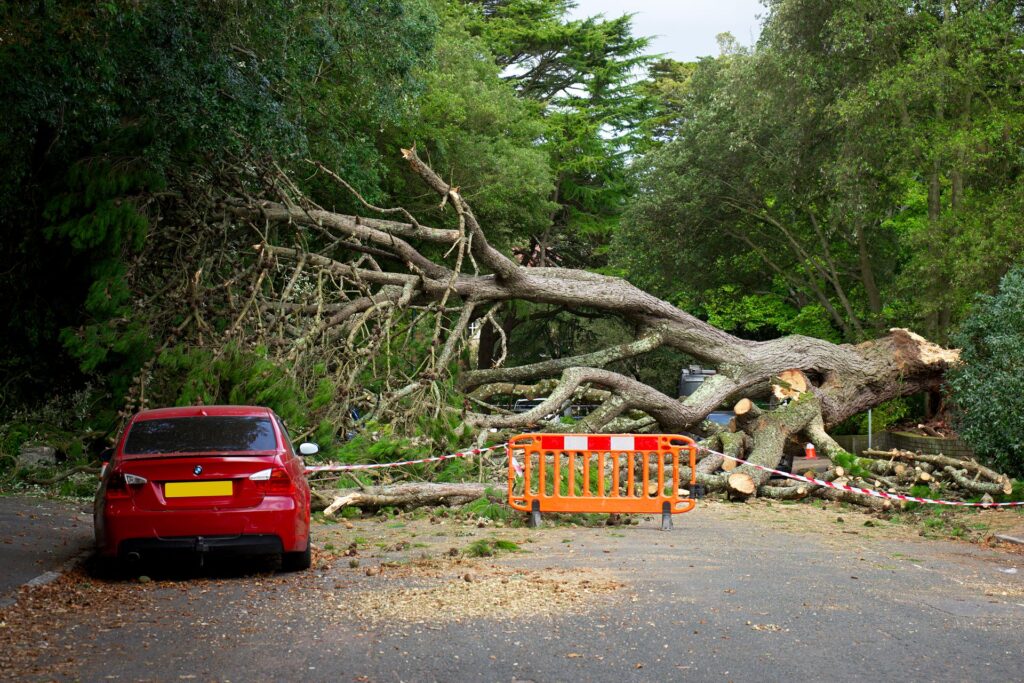
- Inspect the tree yourself first (height, trunk size, condition)
- Always get an in-person visit, not just a phone/photo quote
- Ask for a written, itemized quote (stump, cleanup, hauling included or not)
- Get at least 3 quotes to compare
- Know what drives price: size, access, condition, cleanup
- Watch for red flags: pressure tactics, no insurance, full payment upfront
- Use a cost calculator for a rough baseline before calling around
Getting a tree removed from a yard sounds simple until the phone calls start. One contractor says $300, another says $1,800, and a third one just shows up, looks at the tree for two minutes, and throws out a number that feels completely random. Homeowners often walk away more confused than when they started, wondering which price actually reflects the real work involved.
This guide breaks down exactly how to get quotes that are honest, clear, and based on real factors rather than guesswork. It’s written from the perspective of someone who has dealt with contractors, watched the process unfold, and learned what separates a trustworthy estimate from a number pulled out of thin air.
Why Tree Removal Quotes Vary So Much
Before diving into how to get an accurate quote, it helps to understand why prices swing so wildly between contractors in the first place. It’s rarely about one company being “honest” and another being “greedy.” Most of the time, the difference comes down to how each contractor calculates the job.
Some companies base their price on the height and trunk diameter of the tree. Others factor in location, like how close the tree is to a house, power lines, or a fence. Some include stump removal and debris cleanup in the base price, while others charge those as separate add-ons later.
A few contractors even price based on how long they think the job will take their crew, which can vary depending on how experienced that crew actually is.
This is why two quotes for the “same” tree can look completely different on paper, even though both contractors are looking at the exact same tree in the exact same yard.
The actual size and shape of the tree plays a much bigger role in pricing than most people realize, and understanding how tree height and diameter impact removal price can make it much easier to compare quotes side by side instead of just looking at the bottom-line number.
Step 1: Get the Tree Properly Assessed First
Before calling around for quotes, it’s worth taking a slow walk around the tree and noting a few basic details. This doesn’t require any special tools or expertise, just a bit of observation.
Look at things like:
- How tall is the tree, roughly? (Even a guess like “taller than the house” or “about 30 feet” helps.)
- How wide is the trunk at the base?
- Is the tree leaning, or does it look healthy and upright?
- Are there branches hanging over the roof, driveway, or neighbor’s yard?
- Is there a stump from a previous tree nearby that also needs removal?
Having these details ready before contractors arrive does two things. First, it shows the contractor that the homeowner has done some homework, which often leads to a more careful and honest quote. Second, it gives a baseline to compare against what each contractor says during their own assessment. If one contractor’s numbers are wildly different from the basic measurements already noted, that’s a sign to ask more questions.
It’s also worth thinking about why the tree needs to come down in the first place. Sometimes the reason is obvious, like storm damage or a tree that’s clearly dead. Other times it’s less clear, and a homeowner might just feel like “something seems off” about a particular tree.
In situations like that, it can help to read through the common signs a tree needs to be removed, since some of those signs (like fungus growth at the base, cracks in the trunk, or large dead branches near the top) can actually affect the price too. A tree that’s structurally unstable often requires extra safety precautions, which contractors should factor into their quote.
Step 2: Always Get an In-Person Quote
This might be the single most important tip in this entire guide. Phone quotes and online estimates are almost never accurate.
A contractor can’t truly judge the size of a tree, the difficulty of access, or potential obstacles like power lines, fences, sheds, or gardens just by hearing a description over the phone. Even photos sent through text messages don’t capture the full picture, especially when it comes to judging height and the angle of branches.
When a homeowner calls around for quotes, it’s completely reasonable to ask: “Can someone come out and look at the tree in person before giving me a number?” Most legitimate, experienced contractors will say yes without hesitation.
If a contractor refuses to do an in-person visit and insists on giving a firm price over the phone, that’s often a red flag. It could mean they’re either not very experienced, or they plan to “adjust” the price once they actually see the job (and surprise costs almost always go up, never down).
During the in-person visit, a good contractor will walk around the tree, look up at the canopy, check the trunk for any visible damage or disease, and ask questions about access points for their equipment.
They might also ask whether the homeowner wants the wood chipped, hauled away, or left in a pile for personal use, since this can affect both the price and the time the job takes.
Step 3: Ask for a Written, Itemized Quote

A verbal quote, even one given in person, isn’t enough. Always ask for something in writing. This protects both the homeowner and the contractor, and it forces the contractor to actually think through the details of the job instead of just throwing out a round number.
A proper written quote should include:
- The total price for the job
- Whether stump grinding or removal is included or extra
- Whether debris cleanup and hauling is included
- An estimated timeline for completion
- Any conditions that could change the price (for example, “if the tree is found to be hollow inside, an additional fee may apply”)
- The contractor’s insurance information and license number, if applicable
Written quotes also make it much easier to compare multiple contractors fairly. When everything is laid out item by item, it becomes obvious which contractor is including more services for a similar price, and which one might be leaving things out to make their number look smaller at first glance.
It’s worth noting that some of the biggest pricing surprises in tree removal don’t come from the tree itself, but from everything around it. Things like permit fees, traffic control if the tree is near a road, or charges for working around underground utilities can add up quickly if they’re not mentioned upfront.
Anyone who wants to avoid an unpleasant surprise on the final bill should take a look at the hidden costs of tree removal before signing anything, just to know what kinds of extra charges are common in this industry and how to ask about them ahead of time.
Step 4: Get Multiple Quotes (At Least Three)
This advice gets repeated a lot for almost any home service, and there’s a good reason for that: it works. Getting at least three quotes gives a much clearer picture of what’s “normal” for a particular job in a particular area.
If three contractors come out and two of them say somewhere around $800 to $1,000, but the third one says $2,500, that’s useful information. Maybe the third contractor included something the others didn’t, like stump removal or extra cleanup.
Or maybe they’re simply priced higher because of their experience level, equipment, or reputation. Either way, having that range makes it possible to ask informed follow-up questions like, “The other quotes I received were lower, can you walk me through what’s included in yours that might explain the difference?”
On the flip side, if one quote comes in dramatically lower than the others, that’s also worth questioning rather than automatically celebrating. Sometimes a very low quote means the contractor is cutting corners, doesn’t carry proper insurance, or is leaving out services like cleanup and stump removal that will end up costing extra later.
Getting multiple quotes does take a bit of extra time and a few extra phone calls, but it’s one of the easiest ways to avoid both overpaying and getting an incomplete job.
Step 5: Understand What Affects the Final Price
Even with a written, itemized quote in hand, it helps to understand the bigger picture of what actually drives tree removal pricing. This way, if a contractor explains their reasoning, it actually makes sense instead of sounding like a sales pitch.
Size of the tree is usually the biggest factor. Taller trees with thicker trunks require more time, more cuts, and often bigger equipment. A small ornamental tree in the front yard is going to cost significantly less than a massive oak that’s been growing for decades.
Location and access matter just as much as size. A tree standing alone in an open backyard is much easier (and cheaper) to remove than one squeezed between a house and a fence, or one with branches tangled in power lines. When equipment can’t get close, or when extra care is needed to avoid damaging property, the price goes up.
Tree condition plays a role too. A dead or diseased tree can sometimes be more dangerous to remove than a healthy one, since branches might be brittle and unpredictable, or the trunk itself could be weaker than it looks from the outside.
Cleanup expectations are another piece of the puzzle. Some homeowners want every trace of the tree gone, including the stump, all branches, and all wood chips. Others are happy to keep the wood for firewood and just want the tree down. These choices directly affect the final price.
For anyone who wants a general sense of what to expect before contractors even show up, looking at a breakdown of typical tree removal cost ranges can be a helpful starting point. It won’t replace an actual in-person quote, but it gives a rough idea of what’s reasonable, which makes it much easier to spot a quote that seems unusually high or unusually low right from the start.
Step 6: Use a Tree Removal Cost Calculator as a Starting Point
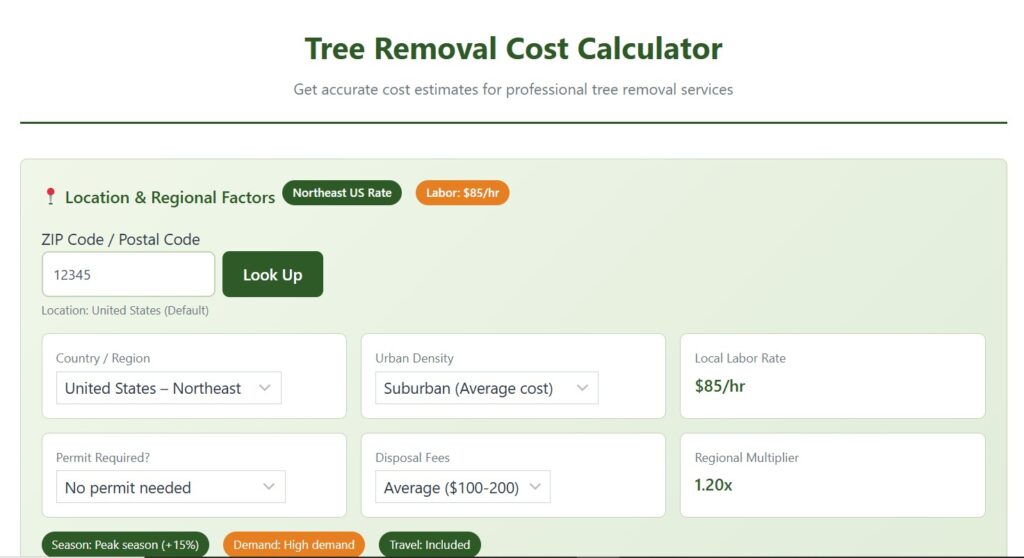
For homeowners who like having numbers before they even pick up the phone, a useful first step is to try out a tree removal cost calculator. These tools usually ask for basic details like tree height, trunk diameter, and location difficulty, then provide an estimated price range based on that information.
It’s important to think of this kind of calculator as a starting point, not a final answer. Every yard is different, every tree is different, and every contractor prices things slightly differently. But having a baseline number in mind before contractors arrive gives homeowners a bit more confidence during the conversation.
If a calculator suggests a job should fall somewhere between $500 and $1,200, and a contractor comes in with a quote of $4,000, that’s a clear signal to ask more questions or get additional opinions.
Using a calculator alongside the steps mentioned earlier, like in-person visits, written quotes, and multiple estimates, creates a well-rounded approach. The calculator gives a general expectation, the in-person visit confirms the specifics of the actual tree, and the written quote locks in exactly what’s being paid for.
Red Flags to Watch Out For During the Quoting Process
Beyond just comparing prices, it helps to pay attention to how a contractor behaves during the quoting process itself. A few warning signs tend to show up again and again with less reliable contractors.
Pressure to decide immediately. A trustworthy contractor understands that homeowners want to compare options and think things over. Someone who insists on an “on-the-spot discount” that disappears if not accepted right away is using a sales tactic, not offering a genuine deal.
Vague or verbal-only pricing. As mentioned earlier, anything that isn’t written down isn’t really a quote, it’s just a guess. If a contractor avoids putting numbers on paper, that’s worth questioning.
No mention of insurance. Tree removal involves heavy equipment, sharp tools, and large objects falling from height. If something goes wrong, like a branch damaging a roof or a worker getting injured, insurance is what protects the homeowner from being financially responsible. Asking about insurance isn’t rude, it’s standard practice, and any professional contractor should be able to provide proof without hesitation.
Unclear cleanup terms. “We’ll clean up after” can mean very different things to different companies. Some haul away every piece of wood and rake the entire area. Others leave the wood in a pile and call it done. Getting specific about what “cleanup” actually includes avoids disappointment later.
Asking for full payment upfront. It’s common for contractors to ask for a deposit, but being asked to pay the entire amount before any work begins is unusual and risky. A more typical arrangement involves a partial deposit, with the remainder paid once the job is completed to satisfaction.
Putting It All Together: A Simple Checklist
For anyone who wants a quick summary to keep handy while calling contractors, here’s a simple checklist that covers everything discussed above:
- Walk around the tree and note its approximate height, trunk size, and condition.
- Decide what’s actually needed (just the tree, or the stump and cleanup too).
- Insist on an in-person visit before accepting any quote.
- Request a written, itemized quote that breaks down every part of the job.
- Get at least three quotes from different contractors.
- Compare quotes side by side, looking at what’s included, not just the total number.
- Ask about insurance, licensing, and what happens if something unexpected is found during the job.
- Use a cost calculator beforehand to set realistic expectations.
- Watch for pressure tactics, vague pricing, or unusual payment requests.
- Take time to decide. A good contractor will still be available tomorrow.
Summary
- Get the tree properly assessed first — Note the tree’s approximate height, trunk diameter, lean, overhanging branches, and whether a stump also needs removing before contractors arrive.
- Figure out why it needs to go — Check for signs of disease, dead branches, fungus, or cracks, since a structurally unstable tree often costs more due to extra safety precautions.
- Always insist on an in-person visit — Phone or photo-based quotes can’t accurately judge size, access, or obstacles like power lines and fences, and refusing an in-person visit is a red flag.
- Request a written, itemized quote — It should clearly state total price, whether stump grinding and debris cleanup are included, estimated timeline, possible extra fees, and insurance/license details.
- Watch for hidden costs — Permit fees, traffic control, and working around underground utilities can add unexpected charges if not discussed upfront.
- Get at least three quotes — This helps you spot the “normal” price range and question quotes that are unusually high or suspiciously low.
- Understand what drives the price — Tree size, location/access, tree condition, and how much cleanup you want (stump removal, hauling, chipping) all affect the final cost.
- Use a cost calculator as a baseline — Get a rough price range before calling contractors so you can quickly spot if a quote seems off.
- Watch for red flags — Be cautious of pressure to decide immediately, verbal-only pricing, no mention of insurance, vague cleanup terms, or requests for full payment upfront.
- Take your time — A trustworthy contractor will still be available tomorrow, so there’s no need to rush a decision.
Final Thoughts
Getting an accurate tree removal quote isn’t about finding the cheapest possible price, it’s about finding a price that’s clear, fair, and includes everything the homeowner actually needs done. The process takes a little more time than just calling one company and saying yes to the first number, but that extra effort almost always pays off.
By understanding what affects pricing, insisting on in-person visits and written quotes, comparing multiple contractors, and watching for warning signs along the way, homeowners can feel confident that the number on their final invoice won’t come as a shock. Tree removal can be a big job, sometimes an expensive one, but it doesn’t have to be a confusing one. With a bit of preparation and the right questions, anyone can walk into this process feeling informed and in control, rather than just hoping the contractor they picked happens to be the honest one.
FAQs
How much should I expect to pay for tree removal?
The cost varies widely based on the tree’s size, location, and condition, but most homeowners pay somewhere between a few hundred dollars for small trees and well over a thousand for large, hard-to-access ones. Getting an in-person quote is the only way to know your actual cost.
Is it normal for tree removal quotes to vary so much between companies?
Yes, it’s very common. Differences usually come down to whether stump removal, cleanup, and hauling are included, plus each company’s equipment, experience, and how they price the difficulty of the job.
Should I get multiple quotes before hiring a tree removal company?
Yes, getting at least three quotes is recommended. It helps you understand what’s a fair price for your specific tree and spot any quote that seems unusually high or suspiciously low.
What should be included in a tree removal quote?
A proper quote should include the total price, whether stump grinding and debris cleanup are part of the cost, an estimated timeline, possible extra fees, and the contractor’s insurance and licensing information.
Do tree removal companies charge extra for stump grinding?
Often yes, stump grinding or removal is frequently treated as a separate add-on rather than being included in the base price, so it’s important to ask about this specifically when comparing quotes.