A tree needs removal (not saving) when you see:
- Over 50% of it is dead or damaged
- Trunk has deep cracks, cavities, or rot
- Sudden leaning after a storm
- Root rot or heaving soil at the base
- Widespread dead branches throughout the canopy
- Severe pest infestation (borers, beetles)
- Fungal growth (mushrooms on trunk or base)
- Multiple problems happening at once
Rule of thumb: If it’s a danger to people or property and more than half the tree is compromised — remove it. Don’t wait for nature to decide.
Trees are more than just plants in a yard. They provide shade, improve air quality, boost curb appeal, and give a neighborhood that calming, green feeling everyone loves. So it makes complete sense that most homeowners want to save their trees whenever possible.
But here is the hard truth — sometimes a tree simply cannot be saved. And when that moment comes, keeping it standing can put lives, property, and even nearby healthy trees at serious risk.
A certified arborist named Mark Henderson once shared a story about a family in Oregon who held off on removing a large oak tree for three seasons because they loved how it looked from their kitchen window. One stormy night, that tree came down on their garage roof.
The damage cost them over $18,000 to repair. Mark said it was one of the clearest cases he had ever seen of a tree that should have come down years earlier.
Stories like this happen every day. The goal of this article is to help homeowners spot the warning signs early — before nature makes the decision for them.
The Difference Between a Sick Tree and a Dying Tree
Not every struggling tree needs to go. Some trees can absolutely be brought back with proper care — deep watering, fertilization, pest treatment, or targeted pruning. A sick tree still has a chance. A dying or structurally compromised tree does not.
The challenge is that most people cannot tell the difference without looking closely. Trees do not send obvious signals the way a sick pet might. Their decline often happens slowly, quietly, and deep inside the wood where no one can see it.
The signs below will help make that distinction clearer.
Sign #1: More Than 50% of the Tree Is Damaged or Dead
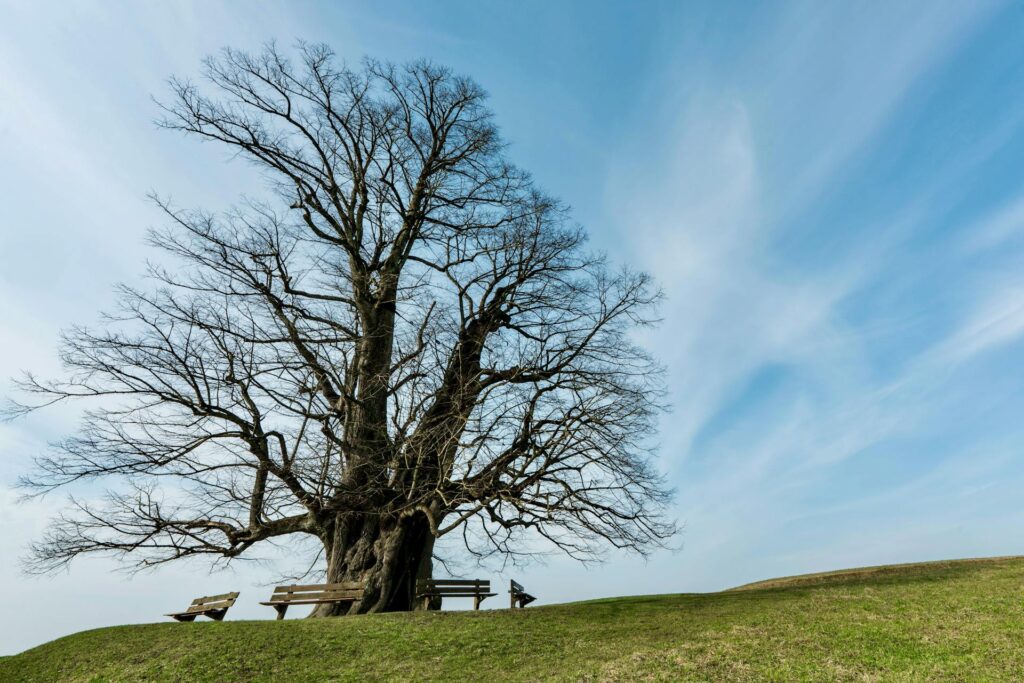
This is one of the clearest benchmarks arborists use. If more than half of a tree’s crown, trunk, or root system is damaged, diseased, or dead, the odds of meaningful recovery drop sharply.
A tree with 50% or more internal decay often becomes structurally unsound even if the outer bark looks somewhat normal. The inside can be completely hollowed out while the outside still shows a few green leaves, giving a false impression of health.
Pay attention to branches that no longer produce leaves during growing season. If a section of the canopy looks bare while the rest of the tree leafs out, that section is likely dead. When dead sections spread and take up the majority of the tree, it is time to think seriously about removal.
Sign #2: The Trunk Has Deep Cracks, Cavities, or Decay
The trunk is the tree’s backbone. When it is compromised, the whole tree is compromised.
Look for these specific warning signs on the trunk:
- Deep vertical cracks that run along the bark
- Hollow cavities or visible rot inside the wood
- Soft or crumbling bark that comes away easily when pressed
- Fungal growth such as mushrooms, shelf fungi, or conks growing directly from the trunk
Mushrooms and shelf fungi growing at the base or on the sides of a trunk are a particularly serious signal. They almost always indicate significant internal rot. The wood may look solid from the outside but feel soft or spongy inside, which means the tree could fail without much warning.
One landscape inspector, Sandra Cowell, recalled visiting a property where the homeowners had lived with a large maple for over 20 years. When they finally called her in, she found a cavity inside the trunk large enough to fit both her arms. The tree had been silently rotting for years. Removal was the only safe option at that point.
Sign #3: The Tree Is Leaning Suddenly or Noticeably
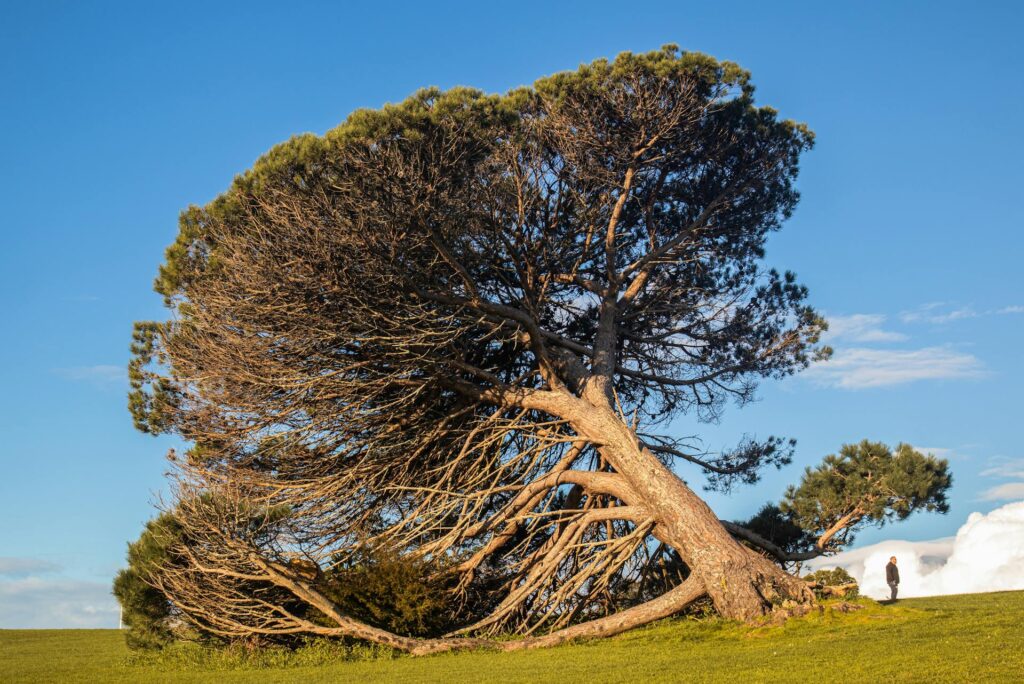
A slight lean that has been part of a tree’s natural growth over many years is usually not a problem. Trees adapt to light and wind patterns, and a gradual lean is often stable.
But a sudden lean — especially one that appears after a storm or during a wet season — is a serious warning sign. A sudden change in lean often means the root system has been compromised or the base of the trunk has partially failed.
Check the ground at the base of the tree. If the soil is cracked, heaving, or shows exposed roots on one side, that tree may be starting to uproot. A tree in this condition can fall with very little additional force — a moderate windstorm or even a heavy rainfall can be enough to bring it down.
Sign #4: Root Damage or Root Rot
Roots are what keep a tree anchored and alive. When they are damaged or diseased, the tree above them is already in serious trouble — even if it looks fine at first glance.
Root problems often happen because of construction work nearby, soil compaction, drought stress, or disease. Signs of root trouble include:
- Fungal growth at the base of the tree
- Heaving soil around the root zone
- Roots that look dead, discolored, or brittle
- Visible erosion that has washed away the soil anchoring the roots
Root rot is particularly difficult to treat because it happens underground and spreads quickly. By the time visible symptoms appear above ground, the damage is usually extensive. Trees with significant root rot almost always need to be removed because they cannot support their own weight safely.
Sign #5: Dead or Hanging Branches Throughout the Canopy
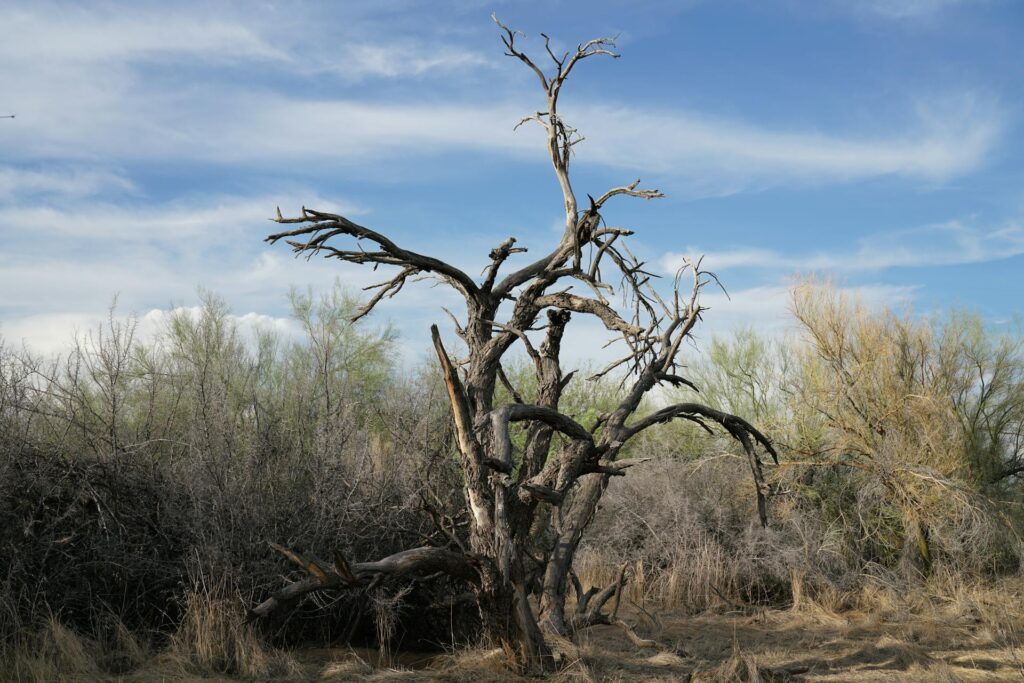
A few dead branches at the top of an otherwise healthy tree is not necessarily a death sentence. Trees naturally shed lower branches over time as light availability changes. But widespread dead branches spread throughout the canopy tell a different story.
Dead branches — also called widow makers by arborists — are dangerous because they can fall unexpectedly, even on calm days. If the majority of the canopy consists of dead or dying branches, it signals that the tree’s vascular system has broken down and can no longer deliver water and nutrients effectively.
Also watch for branches that hang at an unusual downward angle, particularly after a storm. These hangers may be partially broken and held in place only by other branches. They are unpredictable and can fall at any time.
Sign #6: Pest Infestation Has Gone Too Far
Certain insects can devastate a tree’s health in a matter of seasons. The Emerald Ash Borer, the Asian Longhorned Beetle, and the Southern Pine Beetle are just a few species known to kill trees rapidly once they establish themselves inside the wood.
Early infestations can sometimes be treated with insecticides or other interventions. But once an infestation has progressed to the point where more than 30 to 40 percent of the tree’s vascular tissue is destroyed, treatment is rarely effective enough to save the tree.
Signs of serious pest infestation include:
- Sawdust-like frass at the base of the tree or in crevices of the bark
- D-shaped exit holes in the bark (common with borers)
- Serpentine galleries visible under peeling bark
- Woodpecker activity intensifying on the trunk, which often signals the birds are hunting insects inside
If multiple signs are present and the infestation appears widespread, a certified arborist should assess whether treatment is still viable or whether removal is the safer path.
Sign #7: The Tree Is Located in a High-Risk Area
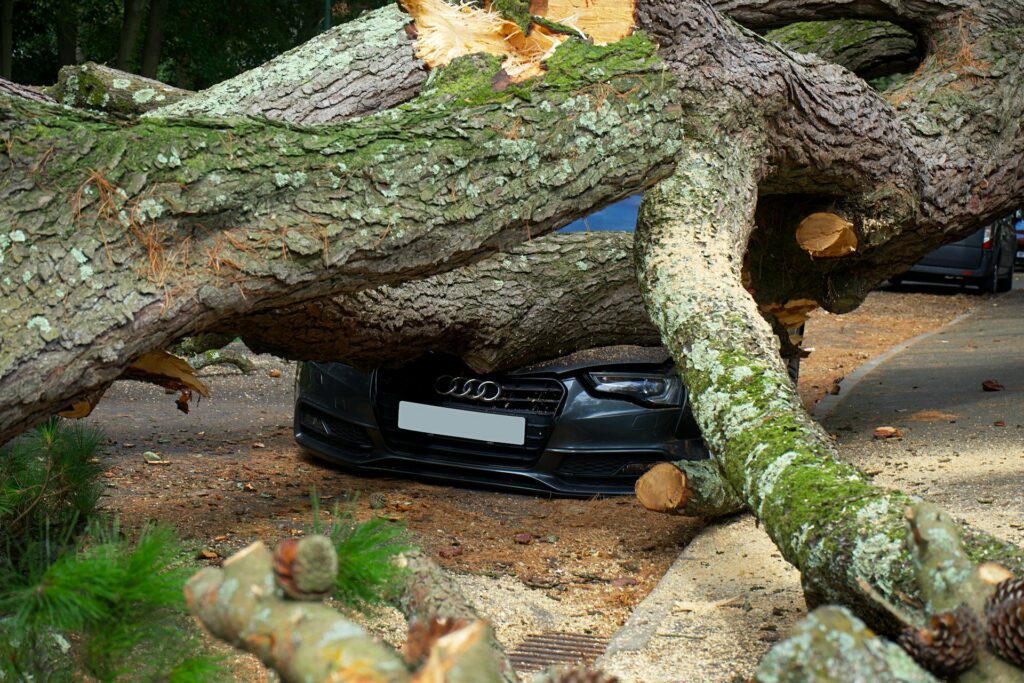
Sometimes it is not about the health of the tree at all. It is about location.
A perfectly healthy tree that is positioned over a roof, near a power line, directly above a driveway, or close to a children’s play area carries a higher level of risk than the same tree in an open field. If that same tree ever develops structural problems — or even just grows larger — the consequences of failure become much more serious.
Arborists and insurance adjusters often recommend removal for trees that sit within 10 to 15 feet of a structure, especially if they are large-diameter trees with extensive canopies. The cost of removal is almost always significantly less than the cost of storm damage repair.
For homeowners thinking through the financial side of this decision, using a palm tree removal cost calculator can help estimate what professional removal might cost based on tree size, species, and location — before getting quotes from local companies.
Sign #8: The Tree Has Already Survived a Major Storm — Barely
Trees that make it through a major storm sometimes look okay on the surface but are actually seriously compromised structurally. Violent winds can crack internal wood fibers, damage root plates, and cause internal splits that are invisible from the outside.
After any major storm, it is worth having large trees inspected by a professional — especially those within falling distance of a home, fence, or vehicle. A post-storm assessment can catch hidden damage before it becomes a collapse.
Look for these post-storm warning signs:
- Bark wounds or abrasions on the trunk
- Exposed root ball or tilted soil at the base
- Split unions where a major branch meets the trunk
- Crown die-back in the weeks following the storm
Trees that show multiple post-storm symptoms and were already in marginal health before the event are strong candidates for removal.
Sign #9: The Tree Has a Co-Dominant Stem with a Weak Union
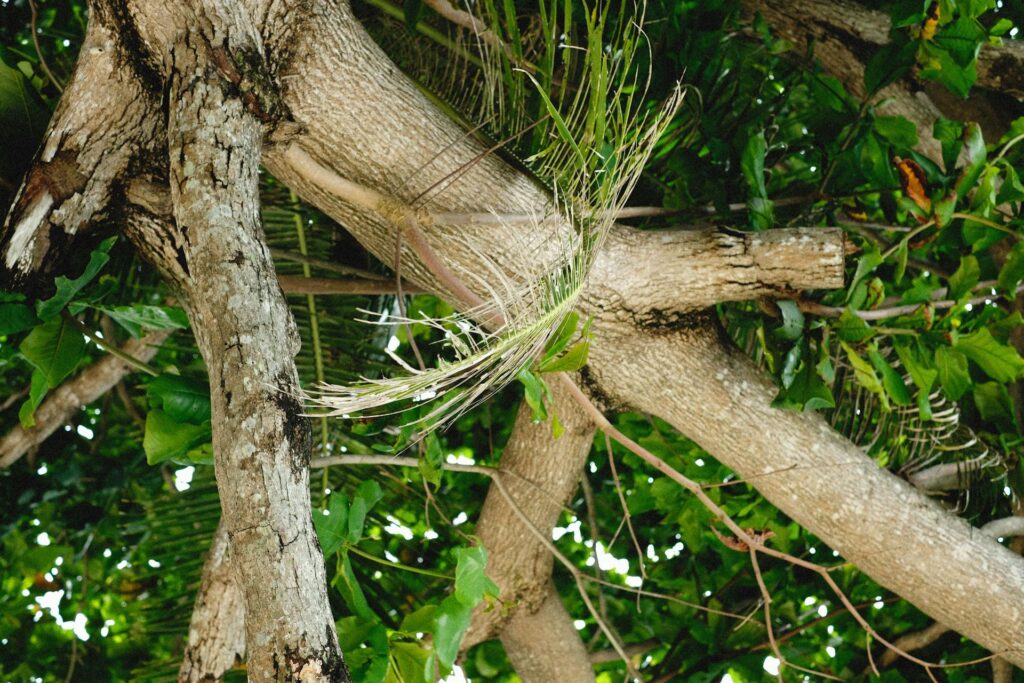
Many trees grow with two or more main stems that emerge from the same base point. This structure is called a co-dominant stem. In some cases it is perfectly stable, but when the union between the stems is weak — particularly when they grow at a narrow angle and include ingrown or included bark — the risk of splitting is high.
Included bark occurs when bark becomes trapped between the two stems, preventing them from fusing properly. This creates a structurally weak joint that can fail dramatically under wind or ice load.
A skilled arborist can sometimes install cabling systems to help stabilize a co-dominant stem situation, but in many cases — particularly in older, larger trees — the risk is too great and removal is the recommended course of action.
Sign #10: Multiple Problems Are Happening at Once
One of these signs alone might be manageable. Two or three happening together tell a much more serious story.
A tree that has root rot, a leaning trunk, fungal growth, and widespread branch die-back all at the same time is not a tree that can be saved by trimming or treatment. Each of these problems compounds the others, and the tree’s overall structural integrity is likely already beyond the point of safe retention.
When multiple warning signs converge, the question is no longer whether to remove the tree — it is how soon.
When to Call a Professional Arborist
Spotting some of these signs on your own is a great first step, but a certified arborist should always make the final call. ISA-certified arborists (certified by the International Society of Arboriculture) are trained to assess tree risk and health systematically. They use tools, training, and experience that go far beyond what a visual inspection from the ground can reveal.
Many arborists offer a free or low-cost initial assessment, and some will provide a written risk rating. This documentation can also be useful for insurance purposes.
If a stump will be left behind after removal, planning ahead for that part of the job makes sense too. A tree stump removal cost calculator can give homeowners a realistic sense of what stump grinding or full stump removal will add to the overall project cost.
What About Fallen Trees?
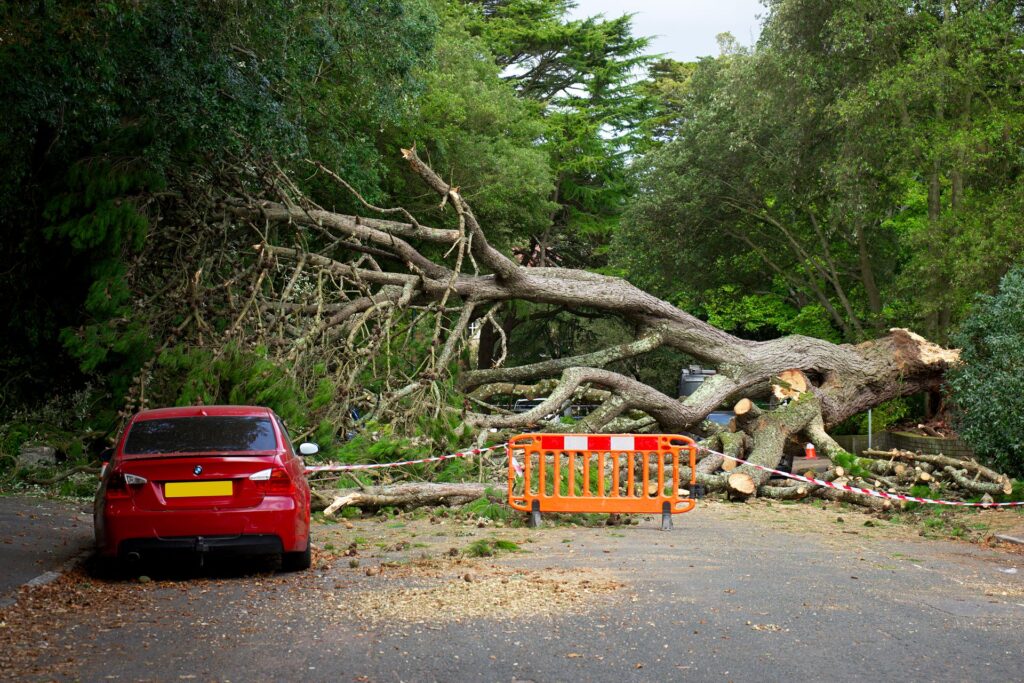
Sometimes the decision is already made. A tree comes down during a storm, and the priority shifts from removal planning to cleanup and recovery.
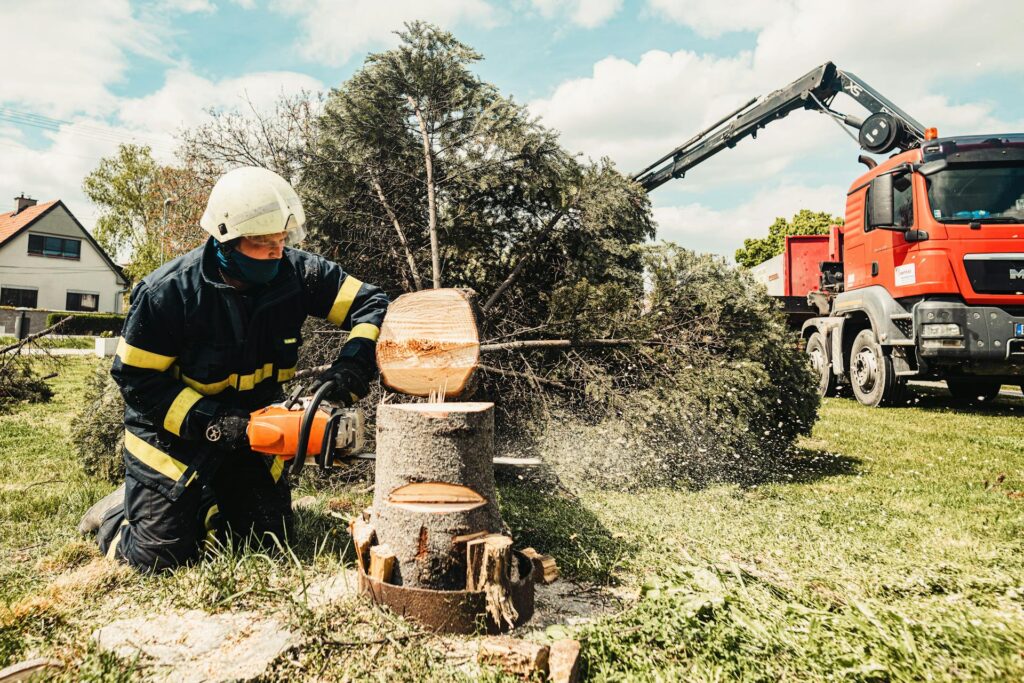
Fallen tree removal is a different job than standard tree removal and often involves different equipment, safety considerations, and pricing. Contacting a local tree service quickly after a fall is important — especially if the tree is resting on a structure, blocking access, or pressing against utility lines.
Homeowners dealing with this situation can use a fallen tree removal cost calculator to get a rough estimate before calling contractors. Having a ballpark number in mind helps avoid being caught off guard by quotes and makes it easier to compare pricing across multiple companies.
The Emotional Side of Tree Removal
It would be incomplete to talk about all of this without acknowledging that removing a tree is often an emotional decision. Trees that have been in a yard for decades become part of a family’s story. They provide summer shade, host tree houses, and mark seasons. Letting go of a tree that has been a fixture of a home’s landscape can feel like a real loss.
That feeling is valid. But the most important thing a homeowner can do for the rest of the property — and for the people on it — is to make a clear-eyed assessment of risk. Keeping a dangerous tree out of sentimentality is a gamble that sometimes ends very badly.
Planting a new tree in a healthy location can be a meaningful way to honor what was removed. Many species grow faster than people expect, and a young tree planted today becomes the shade tree of tomorrow.
Considering Pine Tree Removal
Pine trees deserve a special mention because they present some unique challenges. Their root systems, resin content, and susceptibility to specific beetles make them behave differently from hardwood species during decline. A pine that is dropping needles out of season, showing blue staining in the wood (a sign of blue-stain fungus carried by bark beetles), or producing excessive resin flow may be in serious decline.
For homeowners with pine trees showing any of these signs, getting a professional opinion early is especially important. For those thinking ahead about costs, a pine tree removal cost calculator can provide useful estimates based on tree height, trunk diameter, and accessibility — all factors that significantly affect the price of pine tree removal.
Final Thoughts
No one enjoys the idea of removing a tree. But knowing the signs — real, observable warning signs — takes much of the guesswork and guilt out of the decision. A tree that poses a genuine risk to people or property is not something that should be preserved at all costs.
The good news is that with regular inspections, most problems can be caught early enough to make informed decisions. Annual checks by a qualified arborist, attention to changes in how a tree looks through the seasons, and a willingness to act when the signs are clear — these habits protect both the landscape and the people who enjoy it.
When the signs point clearly toward removal, taking action is not giving up on the tree. It is taking care of everything else that matters.
Summary
A tree should be removed when it can no longer be safely saved. The clearest signs include more than 50% of the tree being dead or damaged, deep trunk cracks or cavities, visible rot, and fungal growth like mushrooms on the trunk or base. A sudden lean after a storm, heaving soil around the roots, or widespread dead branches throughout the canopy are also serious red flags that point toward removal rather than treatment.
Pest infestations from borers or beetles, once they destroy a significant portion of the tree’s tissue, are rarely reversible. And when multiple problems appear at the same time — for example, root rot combined with a leaning trunk and branch die-back — the tree is almost certainly beyond saving.
Location plays a role too. Even a moderately healthy tree positioned over a roof, driveway, or power line carries enough risk that removal may be the smarter choice. The cost of removal is almost always less than the cost of storm damage repair.
The bottom line is simple — when a tree becomes a danger to people or property and shows clear signs of structural failure, removing it is not giving up. It is making the responsible call to protect everything around it. Always consult a certified arborist before making the final decision.
FAQs
How do I know if a tree needs to be removed or just trimmed?
If a tree has dead branches in isolated areas, trimming is usually enough. But if more than 50% of the tree is dead, the trunk is rotting, or the roots are severely damaged, removal is the better option. A certified arborist can confirm which applies to your situation.
Is a leaning tree always dangerous?
Not always. A gradual, long-term lean is often natural and stable. But a sudden lean — especially after a storm or heavy rain — signals root failure or base damage and is a serious safety risk that usually requires immediate removal.
Can a tree with a hollow trunk be saved?
It depends on how much of the trunk is hollow. If the hollow affects less than one-third of the trunk’s diameter, the tree may still be structurally sound. Beyond that, the risk of collapse increases significantly and removal is generally recommended.
What does fungus on a tree trunk mean?
Fungal growth like mushrooms or shelf fungi on a trunk almost always indicates internal rot. It is one of the most serious warning signs a tree can show and typically means the tree is decaying from the inside out and may need to be removed soon.
How much does it cost to remove a dangerous tree?
Tree removal costs vary based on size, species, location, and accessibility. Small trees can cost as little as $150, while large or hazardous trees can exceed $2,000. Using an online tree removal cost calculator before calling contractors helps set realistic expectations.