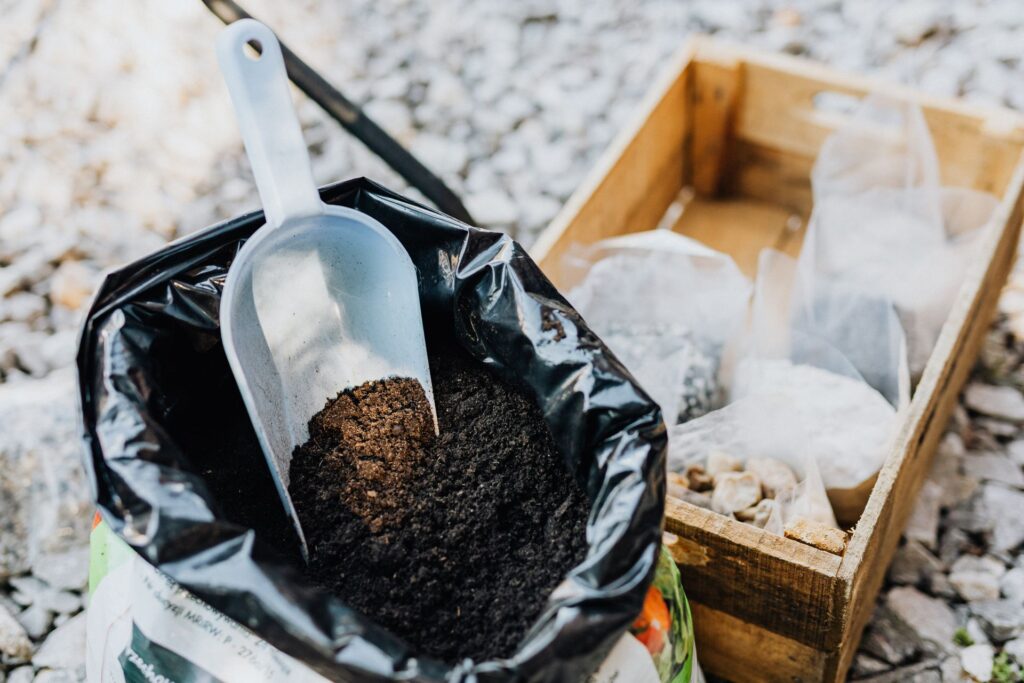
For most garden beds, you need about 1 bag (1 cubic foot) of compost per 6 square feet when applying a 2-inch layer — the most common recommended depth. A 100 square foot garden, that means roughly 17 bags. For a 1-inch layer, cut that in half. For a 3-inch layer on new or poor soil, plan for about 25 bags per 100 square feet. Always check your bag size — most bags come in 0.75, 1, or 2 cubic foot sizes, which changes the total number you need.
Every gardener reaches a point where they stand in front of a pile of bagged compost at the store, staring at their garden bed in their mind, wondering exactly how much to buy. Buy too little, and there’s an annoying second trip back to the store. Buy too much, and there are heavy bags sitting in the garage for months, slowly going to waste.
In this blog post we will break everything down in plain terms, using real numbers, real experience, and simple math that anyone can follow, even without a calculator handy.
Why This Question Matters More Than People Think
Compost is one of those things that seems simple until it’s time to actually buy it. A lot of gardeners guess, and guessing usually leads to either overspending or underfeeding the soil. Over the years, working with raised beds, in-ground rows, and container gardens, one thing becomes very clear: soil health depends heavily on getting this number right.
Too little compost means the soil doesn’t get enough organic matter to improve drainage, hold nutrients, or support healthy microbial life. Too much compost, especially in raised beds, can actually throw off the balance of nutrients and sometimes lead to excess salts building up in the soil. So this isn’t just about saving money — it’s about giving plants exactly what they need.
The Basic Formula for Calculating Compost Needs
Before diving into bag sizes, it helps to understand the basic math behind compost calculations. Compost is usually applied at a certain depth, measured in inches, and that depth determines how much volume is needed to cover a given area.
Here’s the simple formula:
Area (square feet) × Depth (in feet) = Volume needed (cubic feet)
Since compost depth is usually talked about in inches, not feet, there’s one extra step. To convert inches into feet, divide by 12. So if someone wants to add 2 inches of compost, that’s 2 ÷ 12 = 0.166 feet.
For example, a 10 foot by 10 foot garden bed equals 100 square feet. Multiply that by 0.166 feet, and the result is about 16.6 cubic feet of compost needed.
This number — cubic feet — is the key to figuring out how many bags to buy, because compost bags are almost always sold by cubic foot measurements.
Standard Compost Bag Sizes Explained
Most bagged compost sold at garden centers and hardware stores comes in a few common sizes. Knowing these sizes makes the rest of the math much easier.
The most common bag sizes are:
- 0.75 cubic feet (a smaller bag, easy to carry)
- 1 cubic foot (a very common mid-size bag)
- 1.5 cubic feet (a larger, heavier bag)
- 2 cubic feet (the bigger bags, often used for larger projects)
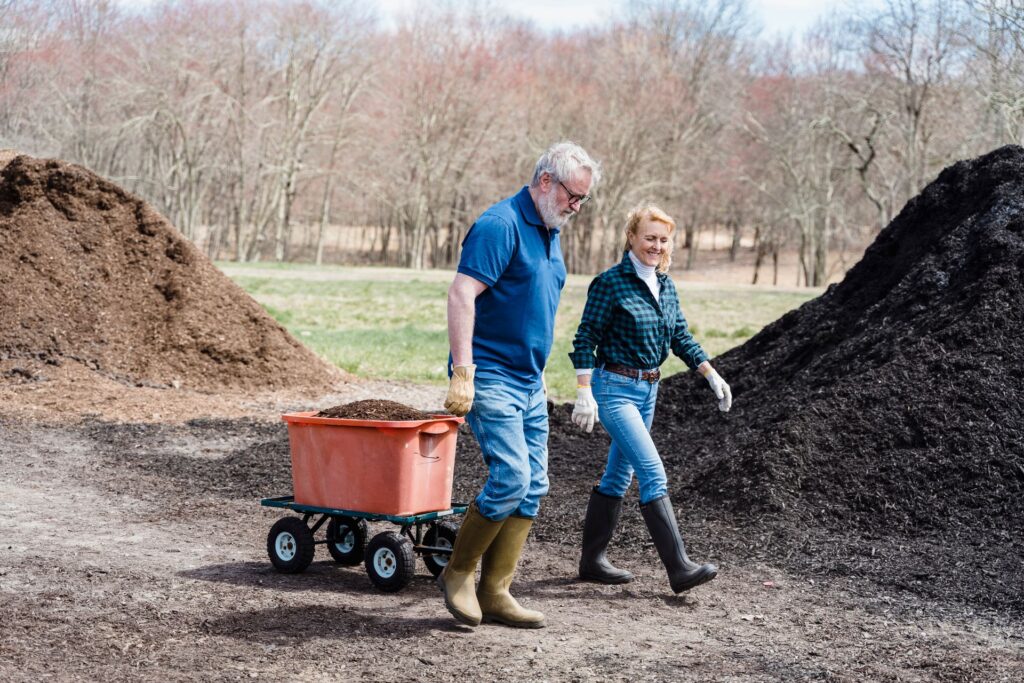
Some brands also sell compost in 1 cubic yard totes or bulk deliveries, which equals 27 cubic feet. That’s usually only practical for very large gardens or landscaping projects, not small backyard beds.
For most home gardeners, the 1 cubic foot bag is the easiest to work with because the math is simple — whatever number of cubic feet is needed, that’s roughly the number of bags required.
How Many Bags Per Square Foot — The Real Numbers
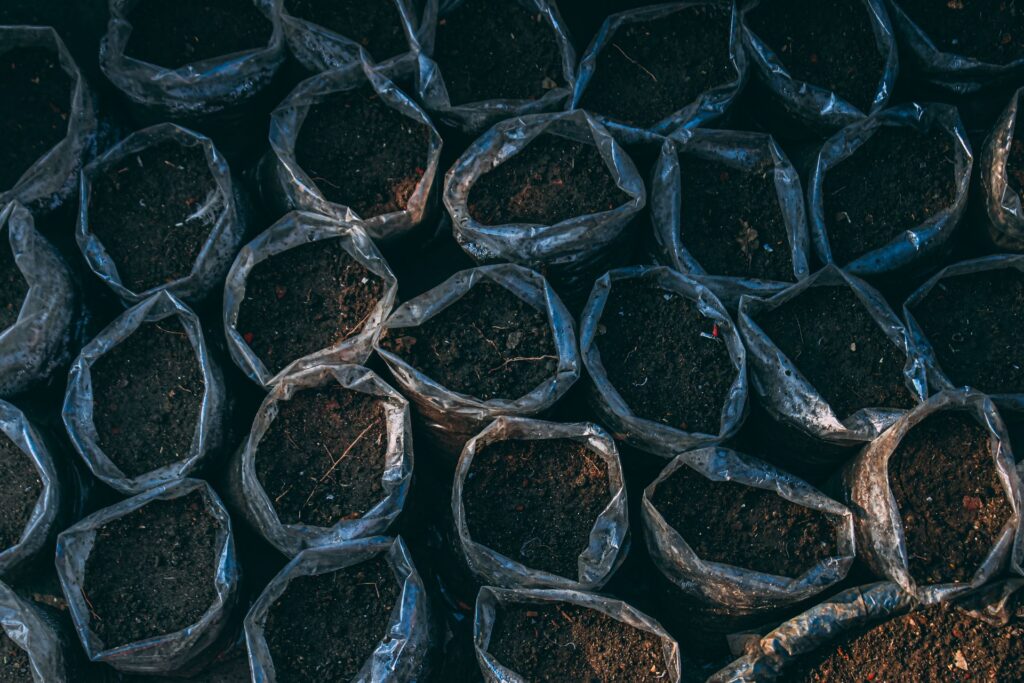
This is the part everyone actually wants to know, so here it is in simple terms. The answer depends entirely on how deep the compost layer needs to be, which depends on the type of garden.
For a 1-Inch Layer of Compost
A 1-inch layer is often used for topdressing lawns or refreshing existing garden beds that already have decent soil.
- 1 square foot needs about 0.083 cubic feet of compost
- 100 square feet needs about 8.3 cubic feet, which is roughly 8 to 9 bags of 1 cubic foot compost
For a 2-Inch Layer of Compost
A 2-inch layer is one of the most common recommendations for general garden beds and vegetable gardens. Many experts and experienced gardeners agree this is a solid baseline for maintaining healthy soil over time.
- 1 square foot needs about 0.166 cubic feet of compost
- 100 square feet needs about 16.6 cubic feet, which is roughly 17 bags of 1 cubic foot compost
For a 3-Inch Layer of Compost
A 3-inch layer is often used when starting a brand new garden bed, especially if the existing soil is poor quality, very sandy, or heavy clay.
- 1 square foot needs about 0.25 cubic feet of compost
- 100 square feet needs about 25 cubic feet, which is roughly 25 bags of 1 cubic foot compost
For a 4-Inch Layer of Compost
A 4-inch layer is on the heavier side and is typically reserved for filling new raised beds when mixing compost with other soil components like topsoil or coconut coir.
- 1 square foot needs about 0.33 cubic feet of compost
- 100 square feet needs about 33 cubic feet, which is roughly 33 bags of 1 cubic foot compost
For anyone unsure which depth fits their situation best, there’s a more detailed breakdown of compost layering available in this guide covering the right depth that explains how depth changes based on soil type and garden goals.
Real-World Example: A Typical Backyard Vegetable Garden
Let’s walk through a real scenario, the kind that comes up constantly in backyard gardens across the country. Imagine a vegetable garden that measures 8 feet by 12 feet, which equals 96 square feet. The goal is to add a 2-inch layer of compost before planting.
Step one: multiply 96 square feet × 0.166 feet (which is 2 inches converted to feet). That gives roughly 15.9 cubic feet.
Step two: divide that by the bag size. If using 1 cubic foot bags, that’s about 16 bags, using 1.5 cubic foot bags, that’s about 11 bags. If using 2 cubic foot bags, that’s about 8 bags.
This is exactly the kind of calculation that trips people up at the store, because they’re standing there trying to do mental math with a cart full of other supplies. This is also why many gardeners now just plug their measurements into an online tool like the Garden Compost Calculator, which does all this math instantly and removes the guesswork entirely.
Raised Beds Need a Different Approach
Raised beds are a bit different from in-ground gardens because they often need to be filled completely, not just topped off. When filling a brand new raised bed, compost usually makes up only a portion of the total soil mix, not the entire thing.
A commonly recommended mix for raised beds is:
- 60% topsoil
- 30% compost
- 10% other materials like perlite, coconut coir, or aged manure
So for a raised bed that’s 4 feet by 8 feet by 1 foot deep, the total volume is 32 cubic feet. Taking 30% of that for compost means about 9.6 cubic feet, which rounds up to roughly 10 bags of 1 cubic foot compost.
This is very different from the topdressing numbers mentioned earlier, so it’s important to know which scenario applies before buying anything.
Why Bag Size Matters More Than People Realize
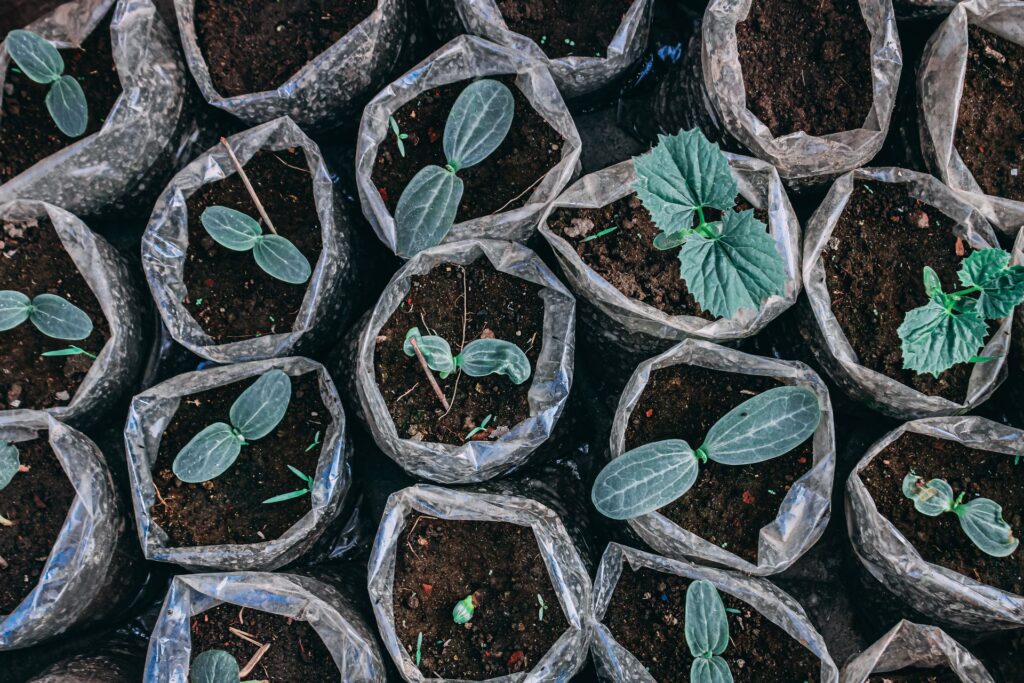
It’s easy to assume all compost bags are basically the same, but the size difference adds up fast once larger areas are involved. Buying 0.75 cubic foot bags instead of 1 cubic foot bags means needing about 33% more bags to cover the same area. That difference might not matter for a small flower bed, but for a 200 square foot garden, it could mean the difference between 34 bags and 45 bags.
Reading the bag carefully before loading up a cart can save both money and an unnecessary extra trip to the store. Some stores also sell compost by weight rather than volume, which adds another layer of confusion. A 40-pound bag of compost doesn’t automatically equal 1 cubic foot, since compost density varies depending on moisture content and what it’s made from (yard waste, manure, mushroom compost, etc.).
How Soil Type Changes the Compost Amount Needed
Not all soil needs the same amount of compost, and this is something that often gets overlooked in generic guides. Soil type plays a huge role in how much organic matter is actually needed.
Sandy soil drains very quickly and doesn’t hold nutrients well, so it benefits from a thicker compost layer, often on the higher end of the 3 to 4 inch range, to help retain moisture and feed the soil over time.
Clay soil is dense and compacted, and while it also benefits from compost, adding too much all at once can sometimes create a layering issue where water doesn’t move well between the compost layer and the clay below. A 2 to 3 inch layer, worked into the top several inches of soil rather than just placed on top, tends to work best.
Loamy soil, which is the ideal middle-ground soil type, usually only needs a 1 to 2 inch maintenance layer each year to keep nutrient levels topped up.
Understanding how compost interacts with different soil types is genuinely one of the most useful things a gardener can learn, because it directly affects drainage, root growth, and how often watering is needed. There’s a great explanation of how this works in detail over at this resource on how compost improves soil structure, which goes deeper into the science behind why this matters so much.
Seasonal Timing Affects How Much Compost Is Needed Too
Compost breaks down over time, which means the amount applied isn’t a one-time, set-it-and-forget-it number. In active growing seasons, especially for vegetable gardens that produce multiple harvests, compost gets used up by plants and broken down by soil microbes much faster.
A common approach many experienced gardeners follow:
- Spring: A 2-inch layer before planting to give the season a strong start
- Mid-summer: An optional 1-inch top-up for heavy feeders like tomatoes, squash, and corn
- Fall: A 1 to 2 inch layer added after harvest, which breaks down over winter and feeds the soil for next spring
This means a garden that needs 17 bags in spring might need another 8 to 10 bags later in the season, depending on how intensively it’s being gardened.
Common Mistakes People Make When Estimating Compost
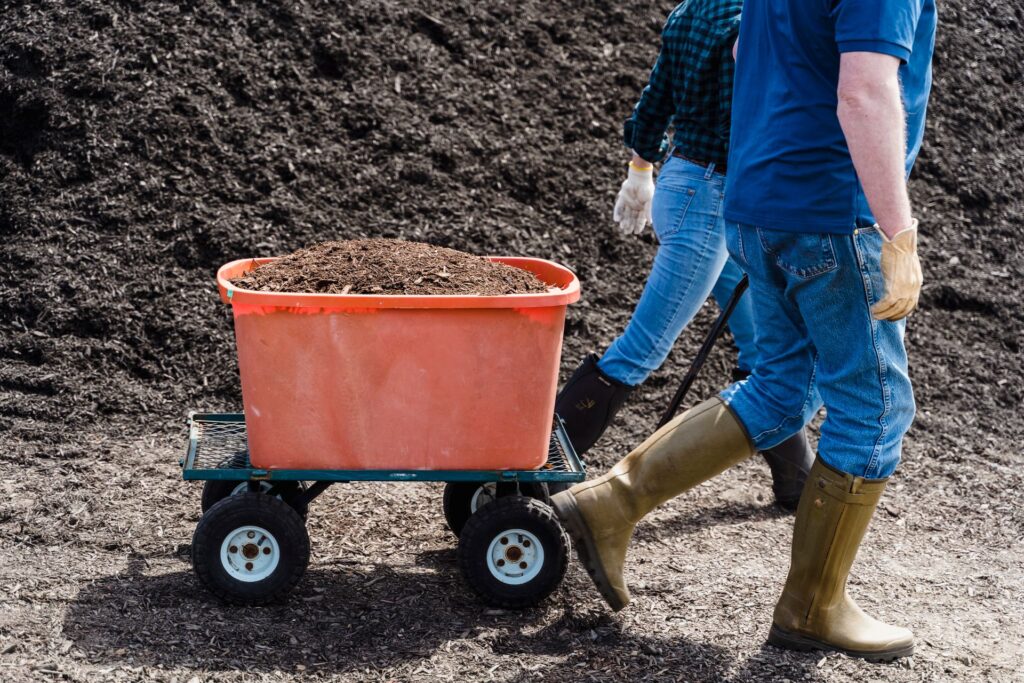
After years of helping friends, neighbors, and fellow gardeners figure out their compost needs, a few mistakes show up again and again.
Mistake one: Forgetting to account for the shape of the garden. A garden isn’t always a perfect rectangle. Curved beds, circular planters, and irregular shapes need to be broken down into smaller, simpler shapes (like rectangles and triangles) and calculated separately, then added together.
Mistake two: Confusing weight with volume. As mentioned earlier, a heavy bag doesn’t always mean a large volume. Always check the cubic feet listed on the bag, not just the weight.
Mistake three: Not accounting for settling. Compost settles over time, especially after the first watering. A layer that looks like 2 inches right after spreading might settle down to closer to 1.5 inches within a week or two. Some gardeners add a little extra (around 10%) to account for this natural settling.
Mistake four: Buying compost without checking the source material. Compost made from mushroom substrate, leaf mold, manure, or yard waste all have slightly different densities and nutrient profiles, which can affect both how much is needed and how it performs in the garden.
A Quick Reference Chart for Common Garden Sizes
To make things even easier, here’s a quick breakdown for some of the most common garden sizes, assuming a standard 2-inch application depth and 1 cubic foot bags:
- 4 ft × 4 ft (16 sq ft): about 3 bags
- 4 ft × 8 ft (32 sq ft): about 6 bags
- 8 ft × 8 ft (64 sq ft): about 11 bags
- 10 ft × 10 ft (100 sq ft): about 17 bags
- 10 ft × 20 ft (200 sq ft): about 34 bags
- 20 ft × 20 ft (400 sq ft): about 67 bags
These numbers are rounded slightly upward, which is generally a good idea since it’s always easier to have a little extra compost on hand than to run short halfway through spreading it.
Mixing Compost With Other Soil Amendments
Compost rarely works completely alone, especially in vegetable gardens or raised beds. It’s often mixed with other amendments depending on what the soil is lacking. Things like aged manure, peat moss, perlite, and worm castings are commonly blended in alongside compost.
When mixing, it’s helpful to think of compost as making up somewhere between 20% and 40% of the total soil volume in most blends, with the rest coming from a base soil (like topsoil) and any additional amendments. This ratio keeps the soil light enough for roots to grow easily while still getting the nutrient and microbial benefits that compost provides.
How Often Compost Needs to Be Reapplied
A question that often comes right after “how much compost do I need” is “how often do I need to add more?” The honest answer depends on what’s being grown and how intensively the garden is used.
For most vegetable gardens, adding compost once or twice per year — typically in spring and fall — is enough to maintain healthy soil. Heavy feeding crops like tomatoes, peppers, and leafy greens that are harvested multiple times throughout the season may benefit from a small mid-season boost as well.
For perennial beds, shrubs, and trees, an annual layer in early spring is usually sufficient, since these plants aren’t being constantly harvested and replanted the way vegetables are.
For lawns, a thin topdressing layer (around half an inch to one inch) once or twice a year, usually in spring and early fall, helps keep grass healthy without smothering it.
Tips for Buying Compost in Bulk vs. Bags
For larger gardens, it sometimes makes more sense to buy compost in bulk rather than individual bags. Bulk compost is usually sold by the cubic yard, and most local landscaping suppliers or garden centers can deliver it directly.
As a general rule of thumb, bulk compost tends to become more cost-effective once a project needs more than about 15 to 20 bags worth of material. Below that threshold, bagged compost is usually easier to handle, store, and transport without needing a truck or trailer.
One downside of bulk compost is that it requires somewhere to dump it — usually a driveway or open area — and it needs to be moved by wheelbarrow to wherever it’s going. Bagged compost, while sometimes more expensive per cubic foot, offers more flexibility and less mess.
Summary:
- Compost amount depends on depth, garden size, and bag size
- The basic formula is Area × Depth = Volume needed in cubic feet
- Most bags come in 0.75, 1, 1.5, or 2 cubic foot sizes
- A 2-inch layer is the most common recommendation for vegetable and garden beds
- New gardens need more compost (3–4 inches); existing beds need less (1–2 inches)
- Raised beds typically use 30% compost mixed with topsoil and other amendments
- Sandy soil needs more compost; clay soil needs it worked in deeper; loamy soil needs the least
- Compost should be reapplied once or twice a year, usually in spring and fall
- Bulk compost is more cost-effective for projects needing more than 15–20 bags
- Always add 10% extra to account for natural settling after watering
- The Garden Compost Calculator can do all the math automatically
Final Thoughts
Figuring out how many bags of compost are needed per square foot really comes down to three things: knowing the area of the garden, deciding on the right depth for the specific soil and goals, and understanding the bag size being purchased. Once those three numbers are known, the math becomes straightforward.
For anyone who wants to skip the manual calculations entirely, using a tool like the Compost Calculator Garden can take all the guesswork out of the equation. Just plug in the garden dimensions and desired depth, and it handles the conversion automatically.
At the end of the day, compost is one of the best things that can be added to soil, whether it’s a small container garden on a balcony or a sprawling backyard vegetable patch. Getting the amount right — not too little, not too much — helps ensure that every dollar spent on compost actually goes toward building healthier, more productive soil for years to come.
FAQs
How many bags of compost do I need for a 4×8 raised bed?
For a 4×8 raised bed with a 2-inch layer, you need about 6 bags of 1 cubic foot compost. If filling the bed completely with a compost mix, plan for around 10 bags based on a 30% compost ratio.
How much compost do I need per square foot for a vegetable garden?
For a vegetable garden, apply a 2-inch layer, which equals about 0.166 cubic feet per square foot. That means roughly 1 bag covers every 6 square feet using standard 1 cubic foot bags.
Is 1 bag of compost enough for a small garden?
One 1 cubic foot bag covers about 6 square feet at a 2-inch depth or 12 square feet at a 1-inch depth. For most small garden beds under 10 square feet, 1 to 2 bags is usually enough.
How deep should compost be applied?
- Existing beds: 1 to 2 inches
- New garden beds: 3 to 4 inches
- Raised beds: mixed at 30% of total volume
- Lawns: 0.5 to 1 inch topdressing
How many bags of compost do I need for 100 square feet?
For 100 square feet you need:
- 1-inch layer → 8 to 9 bags
- 2-inch layer → 17 bags
- 3-inch layer → 25 bags
- 4-inch layer → 33 bags