To find out how much landscape rock you need, multiply the length × width × depth of your space (all in feet), then divide by 27 to get cubic yards.
Quick Formula:
Cubic Yards = Length (ft) × Width (ft) × Depth (ft) ÷ 27
For most garden beds and ground cover projects, a depth of 2 to 3 inches works best. For driveways or high-traffic areas, use 4 to 6 inches.
Example: A 10 ft × 10 ft bed at 3 inches deep needs roughly 0.93 cubic yards of rock.
Always add a 10% buffer to your total to account for settling and uneven ground.
Ordering too little rock means a second trip to the supplier. Ordering too much means wasted money sitting in a pile at the end of the driveway. Most homeowners and landscapers have been there at least once, and the experience teaches a lesson that sticks: getting the quantity right from the start saves time, money, and a lot of frustration.
This guide breaks down everything a person needs to know about calculating landscape rock — from measuring a space correctly to understanding how different rock types affect coverage. Whether someone is covering a small flower bed, a long garden path, or an entire front yard, the math here works for all of it.
Why Getting the Rock Quantity Right Actually Matters
Landscape rock is not cheap. Depending on the type, it can cost anywhere from $30 to $150 per ton, and delivery fees add another $50 to $200 on top of that. A miscalculation of even a few cubic yards can turn a budget-friendly project into an expensive one.
Beyond cost, coverage matters for performance. Too thin a layer — say, less than 2 inches — and weeds push right through. Bare soil shows through gaps, the aesthetic falls flat, and the whole point of using rock as ground cover is lost. Too thick a layer — beyond 4 to 6 inches in most cases — and water struggles to drain properly, which can harm plant roots and lead to puddling.
Getting the amount right also saves effort during installation. A consistent, planned layer means less raking, less redistributing, and a cleaner finish from the start.
The Basic Formula: Understanding How Rock Coverage Works
At the core of every rock calculation is a simple relationship between area, depth, and volume. Most landscape rock is sold by the cubic yard in bulk or by the ton in bags or by weight.
Here is the foundational formula:
Volume (cubic yards) = Length (ft) × Width (ft) × Depth (ft) ÷ 27
The division by 27 converts cubic feet into cubic yards, since 1 cubic yard = 27 cubic feet.
For example, a garden bed that measures 10 feet long by 6 feet wide and needs 3 inches (0.25 feet) of depth would require:
10 × 6 × 0.25 ÷ 27 = 0.56 cubic yards
That is a small amount — manageable with bagged rock from a garden center. But scale that up to a 20-foot by 30-foot side yard at 3 inches deep, and the number jumps to 6.67 cubic yards, which is firmly in bulk delivery territory.
For anyone who wants to skip the manual math entirely, this rock estimator does the heavy lifting in seconds — just plug in the measurements and get an instant answer.
Step-by-Step: How to Measure the Area Correctly
Accurate measurement is the foundation of an accurate rock order. Many people underestimate their space, order short, and then scramble. Here is how to measure properly for different shapes.
Rectangular or Square Spaces
This is the simplest case. Measure the length and width in feet, then multiply the two numbers together to get the square footage.
Area = Length × Width
A bed measuring 12 feet by 8 feet has an area of 96 square feet.
Circular Spaces
For circular garden beds or round features, use the standard circle formula:
Area = π × Radius²
If the diameter of the circle is 10 feet, the radius is 5 feet, and the area works out to approximately 78.5 square feet.
Irregular or Oddly-Shaped Spaces
This is where most people get tripped up. The best approach for irregular spaces is to break the area into smaller rectangles or triangles, calculate each section separately, and then add the totals together. Alternatively, many people walk the perimeter with a measuring wheel for a reliable estimate.
Another method that works well: draw the space on graph paper with each square representing 1 square foot. Count the squares to get a rough but reliable total.
Recommended Rock Depth by Project Type
Depth is just as important as area. Using the wrong depth makes the whole calculation unreliable. Here are the standard recommendations used by professional landscapers:
| Project Type | Recommended Depth |
|---|---|
| Flower beds and garden paths | 2 to 3 inches |
| General ground cover | 3 to 4 inches |
| Driveways and heavy traffic | 4 to 6 inches |
| Drainage and utility areas | 6 to 8 inches |
| Mulch replacement base layer | 2 to 3 inches |
A depth of 3 inches is the most common choice for residential landscaping. It blocks weeds effectively, looks full and finished, and does not overwhelm drainage. Going deeper than 6 inches is usually unnecessary and adds significant cost without a proportional benefit.
How Rock Type Affects Coverage and Weight
Not all landscape rocks are the same weight or density, and this matters when converting between cubic yards and tons. Buying by the bag, by the cubic yard, or by the ton are all common options — and they each require a slightly different calculation.
Here is a general density reference for popular rock types:
| Rock Type | Weight per Cubic Yard |
|---|---|
| Pea gravel | Approximately 1.4 tons |
| River rock | Approximately 1.35 tons |
| Crushed stone | Approximately 1.5 tons |
| Lava rock | Approximately 0.5 to 0.8 tons |
| Decomposed granite | Approximately 1.4 to 1.7 tons |
| Marble chips | Approximately 1.4 tons |
Lava rock is noticeably lighter than the others, which means more volume per ton — and a lower cost per square foot of coverage in many cases. Crushed stone, on the other hand, packs down more densely and weighs more per cubic yard.
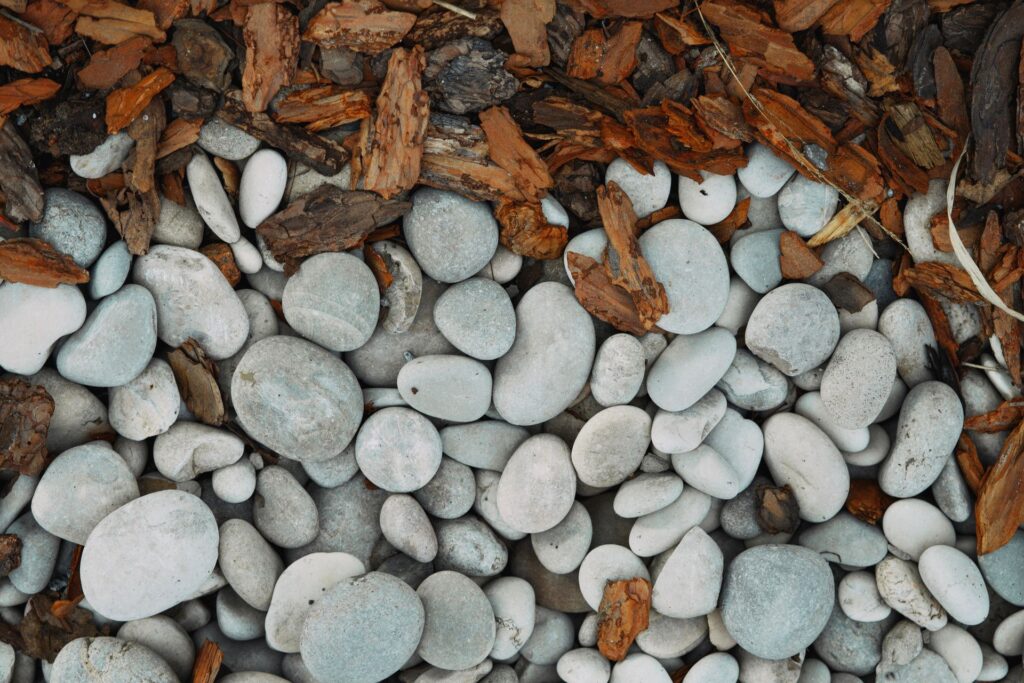
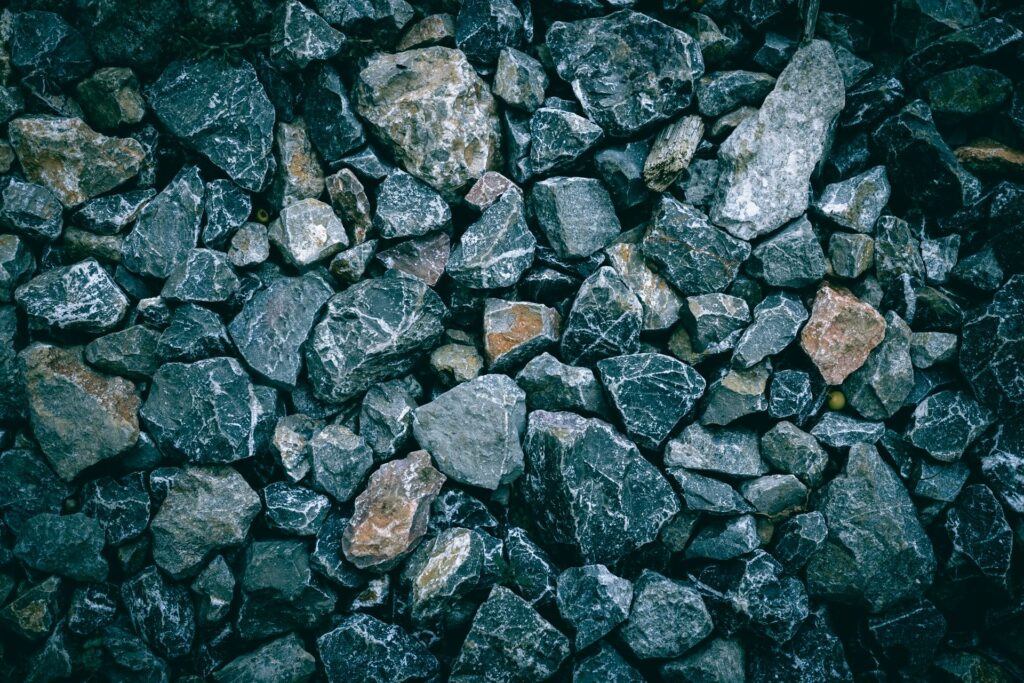
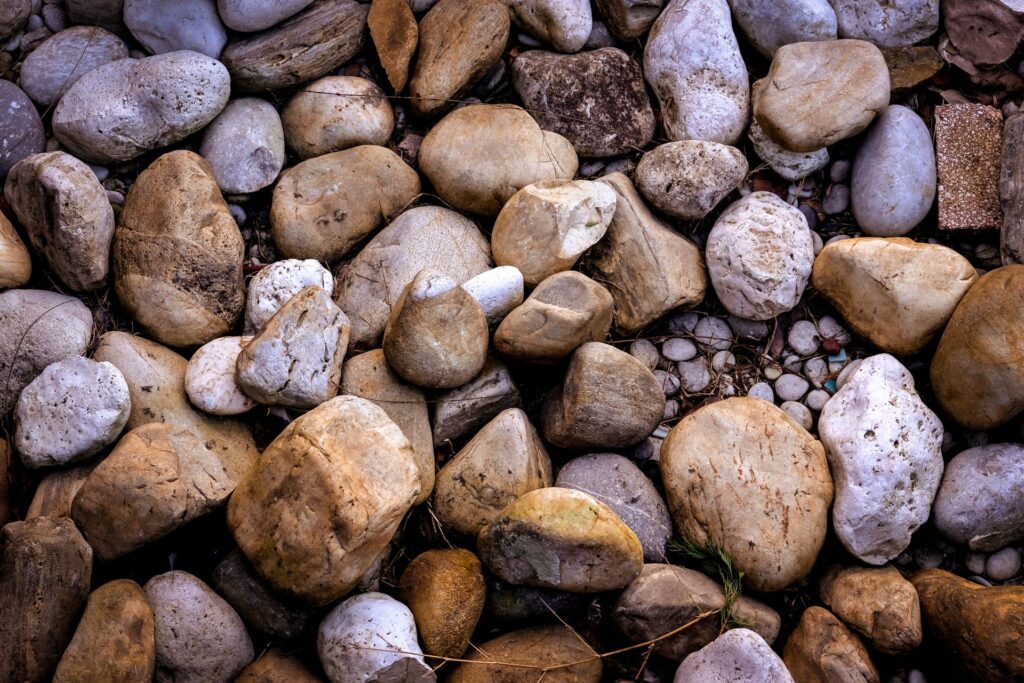
Anyone comparing rock types for their project should check out this gravel guide — it covers pea gravel, river rock, and crushed stone side by side, including practical advice on which works best for different applications.
Converting Cubic Yards to Tons (and Vice Versa)
Many suppliers sell rock by the ton, especially for bulk orders. If the calculation comes out in cubic yards, here is how to convert:
Tons = Cubic Yards × Weight per Cubic Yard
Using crushed stone as an example:
- 5 cubic yards × 1.5 tons per cubic yard = 7.5 tons
And to go the other direction, if a supplier quotes by the ton:
- Tons ÷ Weight per Cubic Yard = Cubic Yards
Always ask the supplier for the exact weight per cubic yard of the specific product being purchased, since densities vary between suppliers and product grades. A brief call before ordering can prevent a costly mismatch.
A Practical Example: Covering a Front Yard Path
Here is a real-world scenario to bring everything together.
The project: A front yard path measuring 40 feet long and 4 feet wide, covered with pea gravel at a depth of 3 inches.
Step 1 — Calculate the area:
40 × 4 = 160 square feet
Step 2 — Convert depth to feet:
3 inches ÷ 12 = 0.25 feet
Step 3 — Calculate cubic feet:
160 × 0.25 = 40 cubic feet
Step 4 — Convert to cubic yards:
40 ÷ 27 = 1.48 cubic yards
Step 5 — Convert to tons (using pea gravel density of 1.4 tons/cubic yard):
1.48 × 1.4 = 2.07 tons
So this path needs roughly 2 tons of pea gravel — or rounding up with a 10% buffer, about 2.2 tons is the smart order.
Always add a 10% buffer to account for settling, uneven ground, and minor measurement errors. It is far easier to store a small leftover bag than to make a second delivery run.
The Garden Rock Calculator handles all of these steps automatically — especially useful for projects with multiple sections or mixed rock types.
How to Handle Irregularly Shaped or Multi-Zone Projects
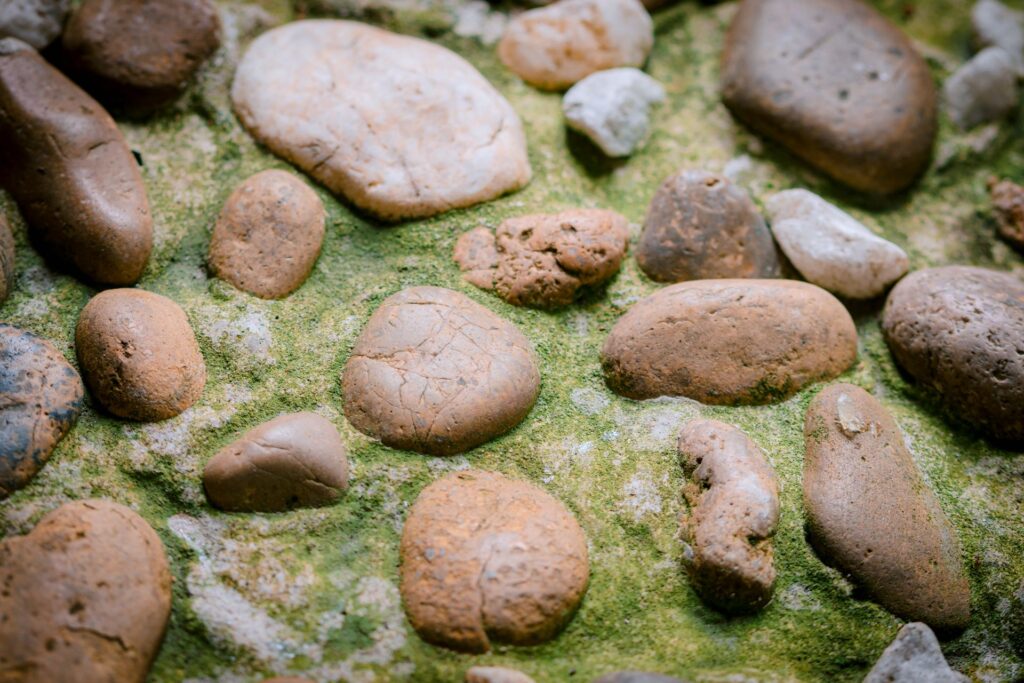
Most real-world landscapes are not single clean rectangles. A backyard might include a patio border, a curved flower bed, a side yard strip, and a drainage channel — all needing different depths or different rock types.
The cleanest approach is to treat each zone separately, calculate the volume for each, and then add the totals at the end. This also makes it easier to order different rock types for different zones without mixing up quantities.
For a project with 3 zones:
- Zone A — Flower bed: 15 ft × 5 ft × 3 in = 0.69 cubic yards
- Zone B — Side yard: 25 ft × 6 ft × 4 in = 1.85 cubic yards
- Zone C — Drainage path: 30 ft × 3 ft × 6 in = 1.67 cubic yards
Total: 4.21 cubic yards — plus a 10% buffer = 4.63 cubic yards
Breaking projects into zones prevents the common mistake of blending measurements and ending up with a number that nobody can trace back to the actual space.
Rock vs. Mulch: Choosing the Right Ground Cover Before You Buy
Before finalizing a rock order, it is worth pausing to confirm that rock is actually the right material for the job. Rock outlasts mulch by many years — in some cases, 10 to 20 years compared to mulch’s 2 to 3 years — but it is heavier, harder to remove, and can raise soil temperatures in summer, which affects certain plants.
Anyone still weighing the two options should read this landscape comparison before making a final call. It covers the long-term cost, maintenance, plant compatibility, and aesthetic differences between rock and mulch in detail.
For low-maintenance landscaping in hot, dry climates, rock is often the clear winner. For gardens with moisture-loving plants or areas that need seasonal refreshing, mulch often wins on plant health and flexibility.
Common Mistakes to Avoid When Ordering Landscape Rock
Even experienced landscapers make these errors from time to time. Here is what to watch out for:
Measuring in inches but forgetting to convert to feet. The formula requires all measurements in the same unit. Plugging 3 inches directly into the formula instead of 0.25 feet inflates the result by a factor of 4.
Not accounting for existing rock or gravel. If there is already 1 inch of rock in a bed and the goal is 3 inches total, only 2 additional inches are needed — not the full 3.
Forgetting about borders and edging. Rock borders around the perimeter of a bed affect the usable coverage area. Subtract any space taken up by raised borders or edging material.
Skipping the buffer. Always add at least 10% extra. Rock settles over time, measurement errors happen, and slight variations in ground level change how much material a space absorbs.
Ordering too early without a delivery plan. Bulk rock delivered without a clear plan for moving it can sit in a pile and damage grass. Have wheelbarrows, tarps, and helpers ready before the delivery truck arrives.
Buying in Bulk vs. Bagged Rock: Which Makes More Sense?
For small projects — covering less than 1 to 2 cubic yards — bagged rock from a home improvement store is often the most practical option. Bags are easy to transport, easy to store, and require no minimum order.
For anything larger, bulk delivery is almost always cheaper. Here is a rough cost comparison:
| Purchase Method | Approximate Cost per Cubic Yard |
|---|---|
| Bagged rock (store) | $80 to $200+ |
| Bulk delivery (local) | $30 to $80 |
The savings on bulk orders grow significantly as project size increases. A 5-cubic-yard project could easily cost $400 to $600 in bags versus $150 to $400 in bulk. The math makes bulk delivery a strong choice for anything beyond a few flower beds.
Final Tips for a Smooth Rock Installation
Once the right quantity is confirmed and the order is placed, the installation process itself benefits from a few key habits:
Prepare the ground first. Remove existing weeds, rake the soil level, and lay down a landscape fabric weed barrier before spreading any rock. This step saves hours of weeding later.
Work in sections. Spreading rock in manageable sections — rather than dumping everything in one spot — gives much better control over depth and coverage. Use a garden rake to spread evenly and a depth gauge (a marked stick works fine) to check thickness as the work progresses.
Edge the area. Metal, rubber, or stone edging installed along the perimeter keeps rock in place and prevents it from spreading into lawn areas over time.
Let it settle before adding more. If the layer looks a little thin after the first spread, give it a few days before topping up. Rock shifts and settles after foot traffic and rain, and what looked shallow on day one often looks perfectly full after a week.
How Weather and Climate Affect Rock Choice and Quantity
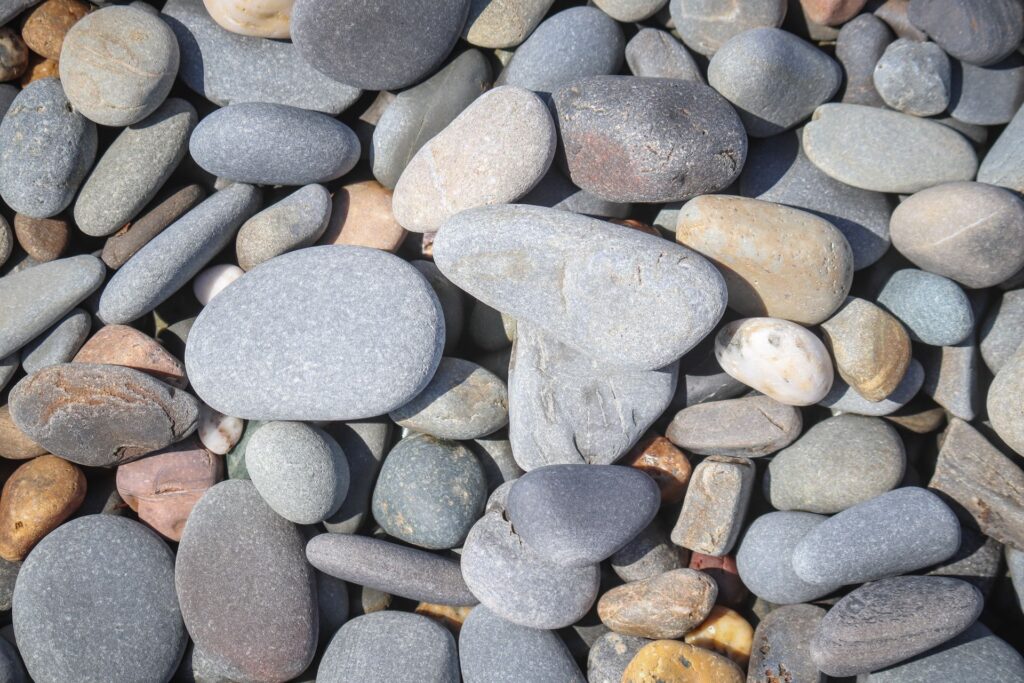
Climate plays a bigger role in landscape rock decisions than most people initially realize. In regions with heavy rainfall, choosing a rock with good drainage characteristics — like crushed stone or pea gravel — can prevent water from pooling around plant roots. In these climates, a slightly deeper layer of 4 inches rather than the standard 3 inches can help channel water away more effectively.
In hot, dry climates like the American Southwest, darker rocks such as black basalt or dark decomposed granite absorb more heat during the day and radiate it at night. This works beautifully for xeriscaped gardens with drought-tolerant plants, but it can stress moisture-sensitive plants. Lighter-colored rocks — like white marble chips or tan pea gravel — reflect heat instead of absorbing it, which keeps the soil cooler during peak summer months.
In freeze-thaw climates, rock that packs tightly — such as crushed stone — tends to hold its position better through the seasonal ground movement. Looser rocks like river rock may shift more noticeably over winter and might need occasional redistribution in spring.
Understanding the local climate before finalizing the rock type helps ensure the project holds up year after year without constant maintenance.
When to Call a Landscaping Professional for Help
For straightforward projects — a garden bed, a walkway, a side yard strip — most homeowners can confidently handle the measurement and ordering process on their own. However, there are situations where calling in a professional landscaper is worth the investment.
Large-scale projects covering 1,000 square feet or more benefit from professional site assessment. Uneven ground, drainage issues, slope angles, and soil conditions all affect how much rock is needed and how it should be installed. A professional can spot these factors during a site visit that a homeowner might miss during a solo measuring session.
Projects near structures — such as rock installation along a foundation, a retaining wall, or a drainage channel — also benefit from professional oversight. Incorrect drainage around a foundation can lead to water intrusion issues that cost far more to fix than the original landscaping project.
For decorative or high-visibility projects — such as a feature garden bed in a front yard or a custom stone patio border — a landscape designer can recommend rock types, colors, and textures that work together for a cohesive look. Getting the quantities right is important, but getting the aesthetic right is what makes a project truly stand out.
Summary
Calculating the right amount of landscape rock comes down to three things: area, depth, and rock type. Using the formula Length × Width × Depth ÷ 27 gives the volume in cubic yards. Most residential projects need a depth of 2 to 3 inches for garden beds and 4 to 6 inches for driveways or high-traffic zones.
Different rocks weigh differently — crushed stone runs about 1.5 tons per cubic yard, while lightweight lava rock sits closer to 0.5 to 0.8 tons. When buying in bulk, always convert cubic yards to tons using the supplier’s specific density figure.
For irregular or multi-zone spaces, the smartest approach is to break the area into sections, calculate each one separately, and add the totals together. Always add a 10% buffer to the final number before placing an order to cover settling, uneven ground, and minor measurement errors.
Bulk delivery is far more cost-effective than bagged rock for projects over 1 to 2 cubic yards, often saving $50 to $120+ per cubic yard. Climate also matters — lighter rocks suit hot climates, while tightly packed crushed stone holds better in freeze-thaw regions.
Getting the quantity right from the start saves time, cuts costs, and results in a cleaner, more professional finish.
Wrapping It All Up
Calculating landscape rock is straightforward once the right formula is in place and the measurements are accurate. The key steps are: measure the area carefully, choose the right depth for the project type, account for rock density when converting to tons, and add a 10% buffer to the final number before ordering.
Taking the time to do this correctly at the start means no scrambling for a second delivery, no wasted rock piled in the corner, and a finished landscape that looks exactly as planned. That is the kind of outcome every homeowner and landscaper aims for — and it is entirely achievable with the right approach.
FAQs
How do I calculate how much landscape rock I need?
To calculate landscape rock, multiply the length × width × depth of the area (all in feet), then divide by 27 to convert to cubic yards. For example, a 10 ft × 10 ft space at 3 inches (0.25 ft) deep needs 0.93 cubic yards of rock. Always add a 10% buffer to your final number to account for settling and uneven ground.
How deep should landscape rock be?
The recommended depth depends on the project type. For flower beds and garden paths, use 2 to 3 inches. For general ground cover, use 3 to 4 inches. For driveways and high-traffic areas, use 4 to 6 inches. A depth of 3 inches is the most common choice for residential landscaping as it blocks weeds effectively and supports good drainage.
How many cubic yards of rock do I need for 1,000 square feet?
For 1,000 square feet at a depth of 3 inches (0.25 ft), you need approximately 9.26 cubic yards of rock. At 2 inches deep, that drops to around 6.17 cubic yards. At 4 inches deep, it rises to about 12.35 cubic yards. Always confirm the depth needed for your specific project before ordering.
How many tons of landscape rock do I need per square foot?
The tonnage depends on the rock type and depth. As a general rule, 1 ton of rock covers approximately 80 to 100 square feet at 3 inches deep. Denser rocks like crushed stone weigh about 1.5 tons per cubic yard, while lighter options like lava rock weigh only 0.5 to 0.8 tons per cubic yard. Always check the density of the specific rock type with your supplier before placing a bulk order.
Is it cheaper to buy landscape rock in bulk or in bags?
Bulk rock is almost always cheaper for projects over 1 to 2 cubic yards. Bagged rock from a store costs roughly $80 to $200+ per cubic yard, while bulk delivery typically runs $30 to $80 per cubic yard. For a 5-cubic-yard project, bulk buying can save anywhere from $250 to $600 compared to purchasing the same amount in bags. For small projects like a single flower bed, bags are more practical since there is no minimum order requirement.