- Measure your garden area in square feet first (length × width for rectangular beds)
- Mulch: Area × depth in inches ÷ 324 = cubic yards needed (use 3 inches depth)
- Topsoil/Compost: Same formula — Area × depth in inches ÷ 324 = cubic yards needed
- Grass Seed: Area ÷ 1,000 × seeding rate per 1,000 sq ft = pounds needed
- Always add 10% to your final number as a buffer for settling and uneven spreading
Starting a garden project without knowing how much material to buy is one of the easiest ways to turn a fun weekend into a frustrating one. Too many bags of topsoil pile up in the driveway. Too little mulch leaves half the bed uncovered. Grass seed runs out before the lawn is finished. These are common problems, and they all share the same root cause — skipping the estimate.
Getting the quantities right does not require a landscaping degree or a complicated spreadsheet. It requires one accurate number — the garden area in square feet — and a handful of simple formulas that apply to every project, every time.
Once those are understood, buying the right amount of mulch, topsoil, compost, and grass seed becomes a quick, confident process rather than a guessing game.
This guide walks through the complete estimation process from the ground up. Every material type is covered with real formulas, worked examples, practical depth guides, and advice that reflects what actually happens in real gardens — not just what looks good on paper.
The Real Cost of Getting the Quantities Wrong
Most gardeners underestimate how much over-buying and under-buying actually cost them — not just in dollars but in time and results.
On the financial side, garden materials add up fast. A cubic yard of quality topsoil runs between $25 and $55 depending on location and supplier. Premium hardwood mulch in bulk typically costs $30 to $60 per cubic yard. A 25-pound bag of name-brand grass seed can cost $60 or more.
Over-buying by even 1 cubic yard of soil on a raised bed project means throwing away up to $55. Over-seed a lawn by 40 to 50% and the wasted product adds another meaningful expense.
Under-buying costs differently. A lawn seeded too lightly produces thin, patchy turf that weeds colonize within the first season. A garden bed mulched at 1 inch instead of 3 provides almost no weed suppression — the entire point of applying it in the first place.
Running out of material mid-project and waiting for a second delivery can delay plantings past their ideal window, which affects the whole season’s results.
Accurate estimation is not about being precise for its own sake. It is about making sure every dollar of material actually does the job it is supposed to do.
Getting the Garden Area Right From the Start
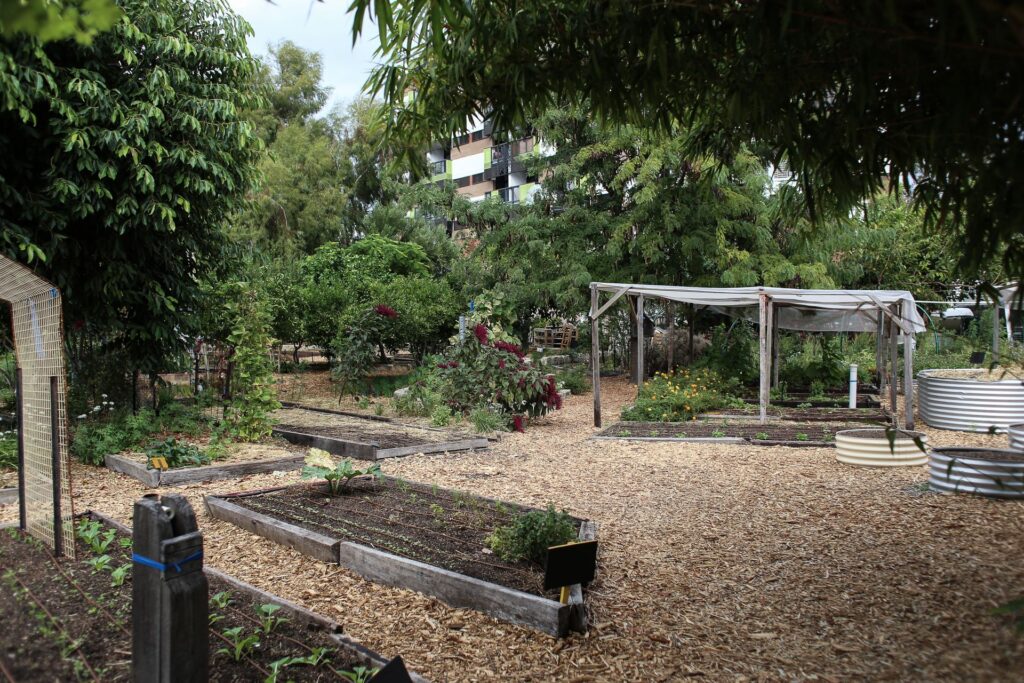
Before any formula can be applied, the area of the garden space needs to be measured in square feet. This is the single most important input in the entire estimation process. A wrong measurement here throws off every calculation that follows.
Rectangular and Square Beds
Straight-sided beds are the easiest to measure.
Length × Width = Square Feet
A bed that is 12 feet long and 4 feet wide covers 48 square feet. A square bed measuring 6 feet on each side covers 36 square feet. That is the entire calculation for a standard raised bed or rectangular border.
Circular Beds and Tree Rings
For round beds and the rings around trees or ornamental shrubs:
Area = π × radius²
The radius is half the full width of the circle. A circular bed 8 feet across has a 4-foot radius. Plugging that in: 3.14 × 4 × 4 = approximately 50.3 square feet.
Triangular Corners and Angles
Corner beds and spaces that run along fence lines at an angle often form triangles.
Area = (Base × Height) ÷ 2
A triangular bed with a 12-foot base and 5-foot height covers 30 square feet.
Irregular and Freeform Beds
Most real garden beds do not follow neat geometric shapes. They curve, narrow at one end, or wrap around features in the yard. The practical solution is to break the space into smaller shapes — rectangles, triangles, and circles — calculate each section separately, and add the results together.
For anyone working with a complex or unusually shaped space, a garden measuring guide covers exactly how to break down difficult shapes and get an accurate total area without guesswork.
Once the square footage is locked in, the material calculations become straightforward.
Calculating the Right Amount of Mulch
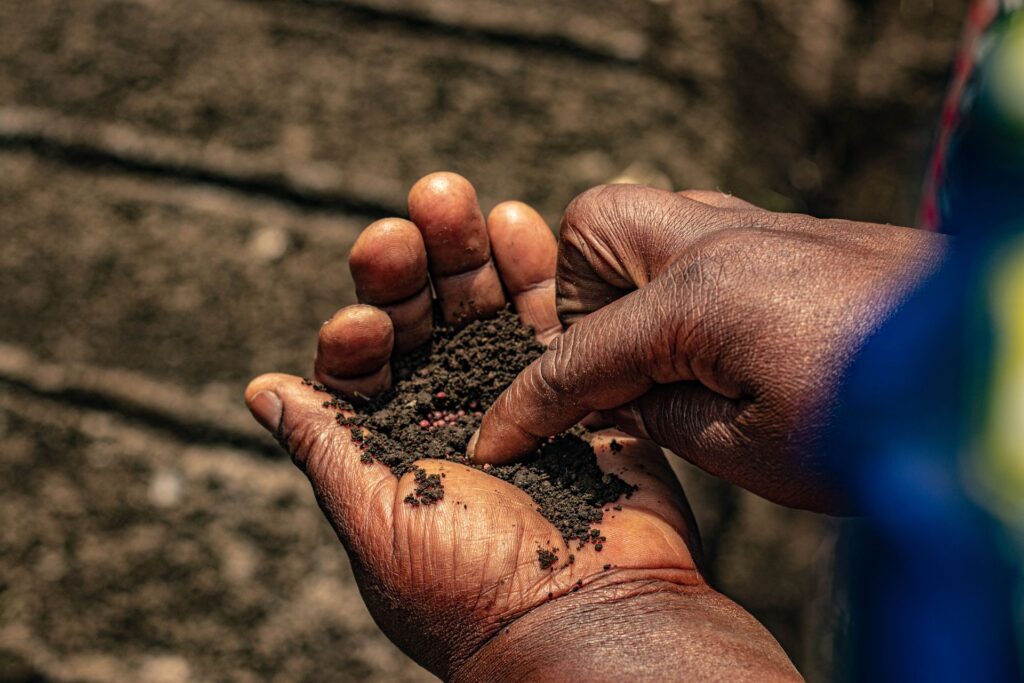
Mulch is one of the most commonly applied garden materials, and it is frequently under-applied because people underestimate how much depth is actually needed for it to work.
How Deep Should Mulch Be Applied?
The depth of mulch determines whether it actually does its job. Applying too little wastes money without delivering results. Here is what different depths achieve:
- Weed suppression: A minimum of 3 inches is needed to block enough sunlight to prevent most weed seeds from sprouting. At 1 to 2 inches, weeds push through with little resistance.
- Moisture retention: 2 to 3 inches meaningfully slows soil evaporation and keeps moisture levels more consistent between rain or watering events.
- Tree and shrub rings: 3 to 4 inches is standard, always kept 2 to 3 inches away from the actual trunk to prevent moisture-related rot.
- Vegetable bed pathways: 2 to 3 inches of wood chip mulch keeps walking areas tidy and weed-free without compacting the growing beds.
- Decorative ornamental beds: 2 inches gives a clean, finished appearance and provides a reasonable level of weed control.
For the majority of garden beds, 3 inches is the practical standard. It delivers real weed suppression, meaningful moisture retention, and lasts a full growing season before needing a top-up.
The Mulch Calculation Formula
Mulch is sold in bulk by the cubic yard or in bags measured in cubic feet. The formula converts the flat garden area and desired depth into a volume figure.
To find cubic yards:
Area (sq ft) × Depth (inches) ÷ 324 = Cubic Yards
The number 324 comes from the fact that 1 cubic yard = 27 cubic feet, and 1 cubic foot covers 12 square feet at 1 inch deep. Multiply those together: 27 × 12 = 324.
Worked example: A garden border measuring 300 square feet needs mulch applied at 3 inches deep.
300 × 3 ÷ 324 = 2.78 cubic yards
Order 3 cubic yards to allow for settling and any variations in spread depth across the bed.
To convert to bags: Standard bags of mulch hold 2 cubic feet each. Since 1 cubic yard = 27 cubic feet, the 2.78 cubic yards above equals 75 cubic feet — meaning roughly 38 standard bags.
Mulch Coverage at Common Depths
| Depth Applied | Area Covered per Cubic Yard |
|---|---|
| 1 inch | 324 sq ft |
| 2 inches | 162 sq ft |
| 3 inches | 108 sq ft |
| 4 inches | 81 sq ft |
One Mistake That Damages Plants Every Season
A mulch application error that shows up in residential gardens constantly is packing material directly against plant stems and tree trunks — sometimes called a “mulch volcano.” This traps moisture against the bark, invites disease, creates habitat for rodents, and can cause root girdling over time. No matter how deep the mulch is applied across the rest of the bed, always leave a clear ring of 2 to 3 inches of bare soil around every stem, trunk, and plant crown.
Working Out How Much Topsoil and Compost to Buy
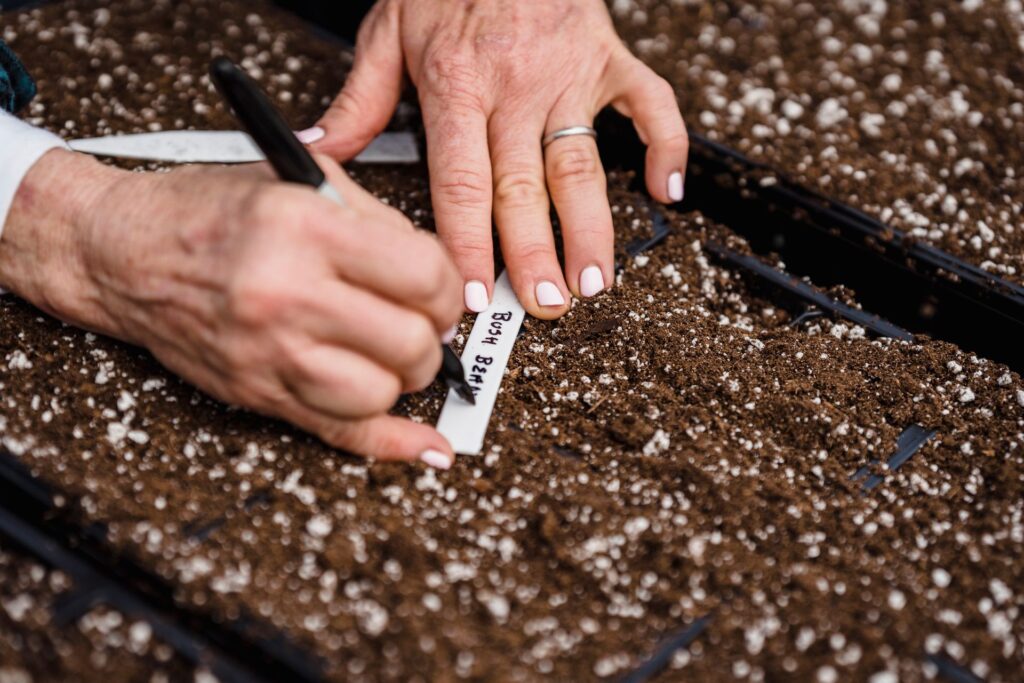
Topsoil and compost solve different problems but are estimated using the same formula. Topsoil fills new raised beds, repairs low spots in a lawn, and builds new planting areas from the ground up. Compost is blended into existing soil to improve texture, drainage, and the biological activity that feeds plants over time.
The Volume Formula for Soil
Area (sq ft) × Depth (inches) ÷ 324 = Cubic Yards
Worked example — raised bed: A bed measuring 4 feet × 10 feet = 40 square feet, filled to 12 inches deep:
40 × 12 ÷ 324 = 1.48 cubic yards — order 1.5 cubic yards
Choosing the Right Soil Depth for What Is Being Grown
Filling a bed to the correct depth matters as much as the quantity. Too shallow and plant roots hit a wall — literally.
- Annual flowers and low-growing herbs: 6 to 8 inches is sufficient for healthy root development
- Most vegetables and perennial plants: 12 inches gives roots comfortable room to grow and access nutrients through the full soil column
- Deep-rooted crops — carrots, parsnips, beets, tomatoes, and squash: 18 inches is the recommended minimum for unrestricted growth and strong yields
- Lawn topdressing and leveling: A thin ¼ to ½ inch layer raked evenly across low spots or bare patches is all that is needed
- Improving an existing in-ground bed: Adding 3 to 4 inches of compost tilled into the top 8 to 10 inches of native soil transforms soil structure without needing a full replacement
Amending Soil With Compost — the Numbers
For a 120 square foot bed where 3 inches of compost is being incorporated:
120 × 3 ÷ 324 = 1.11 cubic yards — order 1.25 cubic yards
When that compost is tilled into the existing soil, it improves the texture and biology of the full tillage depth — not just the top few inches. The improvement compounds season after season as organic matter breaks down and feeds the soil ecosystem.
Bags or Bulk — Which Makes Financial Sense?
- A 40-pound bag of topsoil holds approximately 0.75 cubic feet
- 1 cubic yard of bulk soil equals 27 cubic feet — the same as roughly 36 standard bags
- If bagged soil retails at $6 per bag, that is $216 to match 1 cubic yard of bulk material
- Bulk topsoil in most regions costs $35 to $55 per cubic yard delivered
For projects requiring more than 1.5 cubic yards, bulk ordering almost always cuts the material cost by 50% or more. Bags make sense for container gardens, small patch repairs, and situations where a minimum delivery order is more material than needed.
Figuring Out the Right Amount of Grass Seed
Grass seed is the one material in this guide that is not calculated by volume. Instead, it is estimated by weight per area, based on the specific grass type and whether a new lawn is being established or an existing one is being thickened up.
Why the Seeding Rate Cannot Be Ignored
Applying seed at the wrong rate causes predictable, avoidable problems in both directions.
Under-seeding produces thin turf. The gaps between plants give weeds an immediate foothold, and once weeds establish in a new lawn they are difficult to remove without damaging the grass around them. A thin lawn seeded at half the recommended rate does not just look sparse in year one — it often never fills in properly because weeds occupy the space before the grass can.
Over-seeding causes seedling competition. Too many plants in a small area fight for water, nutrients, and light. The result is a crowd of weak, shallow-rooted seedlings rather than a stand of healthy, deep-rooted turf. Correct seeding rates are based on decades of research into how many plants per square foot produce the strongest, most durable lawn.
Recommended Seeding Rates by Grass Type
The rates below are for new lawn establishment. For overseeding into existing turf, use approximately half these amounts.
| Grass Type | New Lawn (lbs per 1,000 sq ft) | Overseed Rate |
|---|---|---|
| Kentucky Bluegrass | 2–3 lbs | 1–1.5 lbs |
| Tall Fescue | 6–8 lbs | 3–4 lbs |
| Fine Fescue | 4–5 lbs | 2–3 lbs |
| Bermudagrass (hulled) | 1–2 lbs | 0.5–1 lb |
| Zoysia | 2–3 lbs | 1–1.5 lbs |
| Perennial Ryegrass | 5–9 lbs | 3–4 lbs |
| Centipedegrass | 0.25–0.5 lbs | 0.15–0.25 lbs |
Calculating Pounds of Seed Needed
Total Square Feet ÷ 1,000 × Seeding Rate = Pounds of Seed
Worked example: A backyard measuring 3,800 square feet being seeded with Tall Fescue at 7 lbs per 1,000 sq ft:
3,800 ÷ 1,000 × 7 = 26.6 lbs
Round up to 30 lbs to allow for any areas that need a second pass and to ensure edge coverage is not skimped. Seed is commonly sold in 5 lb, 10 lb, 20 lb, and 25 lb bags — a combination can be used to hit the target without large amounts of leftover product.
Pairing Seed With Starter Fertilizer
Grass seed applied without starter fertilizer is a missed opportunity. Starter fertilizers are formulated with high phosphorus content — the nutrient most directly responsible for root development in young seedlings. Without it, new grass develops shallow roots that are easily stressed by summer heat, dry spells, or foot traffic.
The standard rate is 1 lb of actual phosphorus per 1,000 square feet, applied at seeding time. For the 3,800 square foot example, that means approximately 3.8 lbs of actual phosphorus — check the bag’s guaranteed analysis label to determine how much product delivers that amount.
Putting It All Together — Complete Project Estimates
These three scenarios show how all the formulas work together on real projects.
A New Raised Vegetable Bed
Bed size: 4 ft × 10 ft = 40 square feet Fill depth: 12 inches
Soil: 40 × 12 ÷ 324 = 1.48 cubic yards — order 1.5 cubic yards
Surrounding pathways: Two paths, each 2 ft × 10 ft = 40 square feet at 3 inches mulch depth
Mulch: 40 × 3 ÷ 324 = 0.37 cubic yards — approximately 10 cubic feet or 5 standard bags
A Front Lawn Renovation
Total lawn area: 2,600 square feet Grass: Tall Fescue overseeded at 4 lbs per 1,000 sq ft
Seed: 2,600 ÷ 1,000 × 4 = 10.4 lbs — purchase 12 lbs
Compost topdress: ¼ inch layer across the full area
Compost: 2,600 × 0.25 ÷ 324 = 2.0 cubic yards bulk delivery
A Mixed Shrub and Perennial Border
Border area: Irregular shape measuring 200 square feet total Mulch depth: 3 inches
Mulch: 200 × 3 ÷ 324 = 1.85 cubic yards — order 2 cubic yards to allow for settling
Smart Buying Habits That Prevent Waste
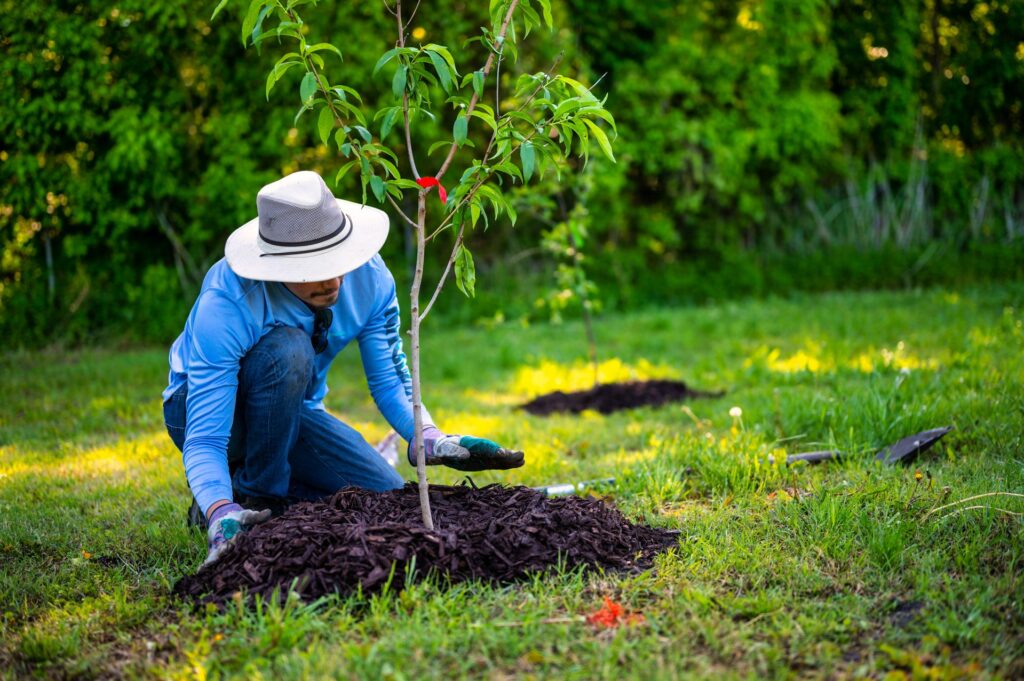
A few reliable habits from experienced gardeners that are worth adopting on any project:
Add 10% to every volume estimate. Mulch settles after it is applied. Soil compacts under its own weight and under foot traffic. Compost reduces in volume as it is tilled in. A 10% buffer built into the order covers all of these without requiring a second purchase.
Confirm what the supplier is actually selling. The label “topsoil” covers a wide range of products — from high-quality screened loam to sandy fill with very little organic content. Ask the supplier about the source, the screening size, and whether it is sold by weight or volume. For compost, ask whether it is fully finished — unfinished compost can actually harm plants by pulling nitrogen out of the soil as it continues to break down.
Know the minimum bulk delivery threshold. Most landscape suppliers require a minimum order of 1 to 2 cubic yards for delivery. For projects just under that amount, bags may be more practical. For anything over it, bulk is almost always the more economical and more convenient choice.
Use a reliable tool to double-check the area. Before placing a bulk material order, it is worth confirming the square footage is accurate. The Garden Area Calculator makes it quick and easy to verify measurements before committing to a delivery.
Look into municipal composting programs. Many local governments offer free or heavily discounted wood chip mulch and compost made from yard waste collected through curbside programs. For large projects, sourcing mulch this way can dramatically reduce or eliminate material costs. The product tends to be coarser than bagged premium mulch but is excellent for pathways, base layers, and tree rings.
The Formula Reference Every Gardener Should Keep Handy
These four calculations handle nearly every garden material estimate that comes up in practice:
Mulch or Soil — cubic yards:
Square Feet × Depth in Inches ÷ 324
Mulch or Soil — cubic feet:
Square Feet × Depth in Inches ÷ 12
Number of 2 cu ft bags:
Total Cubic Feet ÷ 2
Grass Seed — pounds:
Square Feet ÷ 1,000 × Seeding Rate per 1,000 sq ft
These formulas scale for any size project and any garden shape. The only variable that needs to change from one project to the next is the square footage — and once that number is accurate, everything else follows reliably.
Summary
- Always measure your garden area in square feet before buying any materials
- For mulch and soil, use the formula: Area × depth in inches ÷ 324 = cubic yards needed
- Mulch depth should be 2 to 4 inches depending on purpose — 3 inches is the standard for weed suppression
- Topsoil depth depends on what is growing — 6 inches for flowers, 12 inches for vegetables, 18 inches for deep-rooted crops
- For grass seed, divide area by 1,000 then multiply by the seeding rate for your grass type
- Overseeding requires roughly half the rate used for new lawn establishment
- For large projects, bulk delivery is far more economical than buying individual bags
- Always add 10% to every estimate to account for settling, compaction, and uneven spreading
- Pair grass seed with a starter fertilizer at 1 lb per 1,000 sq ft for best germination results
Wrapping It All Up
The difference between a garden project that runs smoothly and one that stalls out in the middle often comes down to one step taken at the very beginning — measuring the space and calculating the materials before buying anything.
The formulas covered in this guide are not complicated. They are the same calculations professional landscapers use every day on projects of all sizes. What makes them powerful is not their complexity but their consistency. Apply them correctly and the estimate will be accurate whether the project is a 20 square foot herb garden or a 5,000 square foot lawn renovation.
Mulch applied at the right depth actually suppresses weeds and holds moisture. Topsoil filled to the correct depth actually supports healthy root systems. Grass seed spread at the right rate actually establishes a thick, weed-resistant lawn. All of those results begin with a measurement and a formula — and both are well within reach of any home gardener willing to take a few minutes before heading to the garden center.
Get the area right, run the numbers, add a small buffer, and buy with confidence.
FAQs
How much mulch do I need for a garden bed?
To calculate mulch, multiply your garden area in square feet by the desired depth in inches, then divide by 324 to get cubic yards. For a 200 square foot bed at 3 inches deep, you need approximately 1.85 cubic yards of mulch. Always add 10% extra to cover settling and uneven spreading.
How do I calculate how much topsoil I need for a raised bed?
Use the formula: area in square feet × depth in inches ÷ 324 = cubic yards needed. A standard 4 × 8 foot raised bed filled 12 inches deep requires approximately 1.2 cubic yards of topsoil. For deep-rooted vegetables like carrots or tomatoes, fill to at least 18 inches for best results.
How much grass seed do I need per square foot?
Grass seed is measured per 1,000 square feet, not per single square foot. Divide your total area by 1,000 then multiply by your grass type’s seeding rate. Tall Fescue needs 6 to 8 lbs per 1,000 sq ft for new lawns, while Kentucky Bluegrass needs just 2 to 3 lbs per 1,000 sq ft.
How do I measure my garden area for mulch or soil?
For rectangular beds, multiply length by width. For circular beds, use π × radius². For irregular shapes, break the space into smaller rectangles and triangles, calculate each section separately, and add the totals together. Getting the area right first is the most important step before calculating any material quantity.
Is it cheaper to buy mulch and soil in bulk or in bags?
Bulk is almost always cheaper for larger projects. A cubic yard of bulk topsoil typically costs $35 to $55 delivered, while buying the equivalent amount in 40-pound bags at $6 each can cost over $200 for the same volume. For any project requiring more than 1.5 cubic yards, bulk delivery saves significant money.